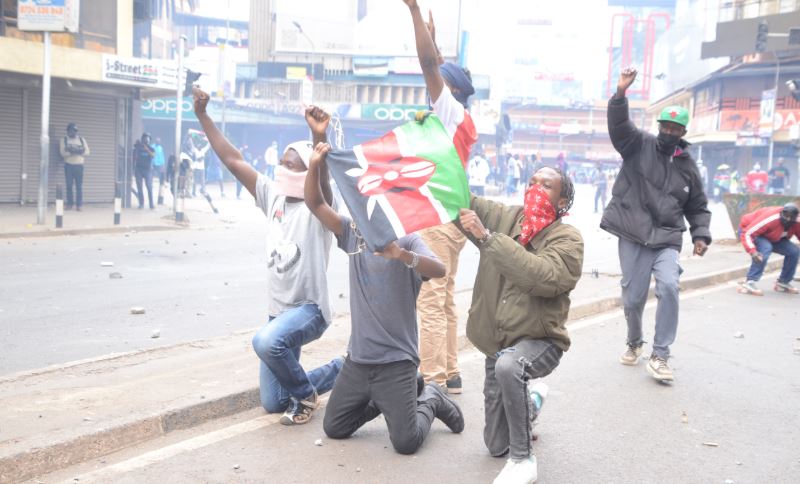
A total of 348 people affected by human rights violations connected to demonstrations and public protests between 2013 and 2025 have received compensation worth Ksh448.7 million as part of the first phase of a government-backed reparations programme.
In a statement on Tuesday, June 23, the Panel of Experts on Compensation of Victims of Human Rights Violations Chairperson, Makau Mutua, said the process has formally started for eligible and verified beneficiaries.
“The Panel of Experts on Compensation of Victims of Human Rights Violations, including those arising from demonstrations and public protests for the period 2013 to 2025, has officially commenced the reparation process by providing compensation to eligible and verified victims,” he wrote.
Mutua said the current phase includes only beneficiaries who completed all required steps and provided their consent.
“It is important to note that only those who have consented to this process are being compensated. Consent is the final act that a beneficiary must give to receive compensation,” he added.
Ksh3 Million Each for 115 Families: Protest Victims Payout Breakdown
According to the panel, the first batch of compensation covers six categories of harm.
The panel awarded Ksh3 million each to 115 victims of fatal incidents, bringing the total to Ksh345 million. It also paid Ksh1 million each to 24 victims classified as having suffered severe injuries, totaling Ksh24 million.
In addition, the panel compensated 137 victims with moderate injuries with Ksh500,000 each, amounting to Ksh68.5 million, while it gave Ksh50,000 each to 60 victims with minor injuries for a combined Ksh3 million.
The panel further compensated eight victims of aggravated sexual offences with Ksh1 million each, totaling Ksh8 million. It also paid four victims who suffered economic losses Ksh50,000 each, amounting to Ksh200,000.
Overall, the panel disbursed Ksh448.7 million in the first phase.
Mutua said the exercise will continue until all verified victims receive compensation.
“This is the first phase of the compensation programme and will be implemented on a continuous basis until every eligible victim has been compensated. We are committed to ensuring every verified victim is compensated, promptly, fairly, and with the dignity they deserve,” he noted.
Speaking to beneficiaries, Mutua said the payments represent a major milestone after years of waiting.
“To the victims, the long wait is over. Today, we begin to make right what was wrong. Your courage in coming forward has made this day possible. We honour your resilience and your dignity,” he added.

Mutua said all approved claims went through a thorough review and verification process before any payments began.
“Every claim approved for compensation has undergone the full administrative process outlined in the Reparations Guidelines developed by the Kenya National Commission on Human Rights (KNCHR), comprising registration, verification, authentication, categorization of harm, approval, and disbursement,” he said.
The panel also announced that it would publish the details of compensated beneficiaries in line with existing legal requirements.
“The Panel further informs the public that the names of all compensated victims shall be published periodically in the Kenya Gazette, guided by the provisions of the Data Protection Act, 2019,” Mutua revealed.
He also urged victims who have not yet submitted claims or provided payment information to come forward so the programme can proceed smoothly.
“Importantly, victims who have yet to file a claim or to share their bank and other payment details are encouraged to do so without delay,” he concluded.
KNCHR Withholds Victims’ Identities
Meanwhile, the Kenya National Commission on Human Rights (KNCHR) defended its decision to withhold the identities of individuals slated for compensation.
KNCHR Director Cyrus Maweu said the compensation framework and related reports remain publicly available, but victims’ personal information had been submitted with the expectation that it would stay confidential.
He added that victims consented to participate in the compensation process, not to have their personal details disclosed.