 The Social Health Authority (SHA) has recovered Sh278 million from health facilities implicated in fraudulent activity, following a series of admissions and settlements by affected institutions.
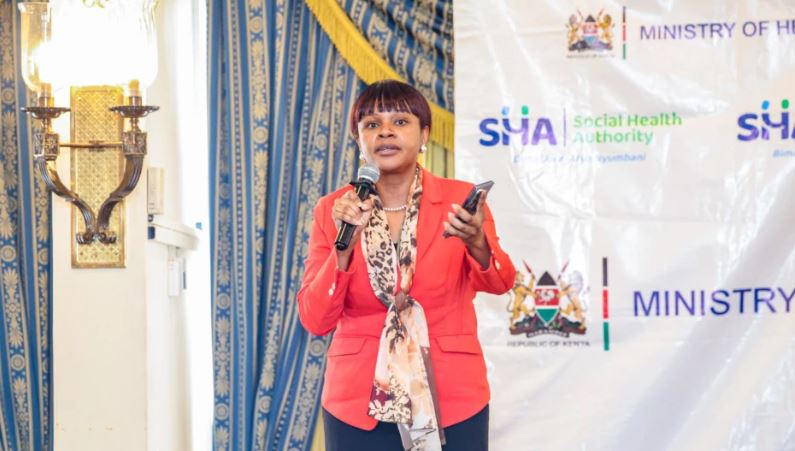
Speaking at a Ministry of Health Town Hall meeting, SHA Chief Executive Officer Dr. Mercy Mwangangi disclosed that the funds represent voluntary repayments from facilities that opted to refund fraudulently claimed monies. She noted that cases before the authority remain at various stages of determination across multiple investigative and judicial channels.
While some matters remain active under the Directorate of Criminal Investigations (DCI), others are being processed internally by SHA through administrative measures or escalated to the Office of the Director of Public Prosecutions (ODPP) for alternative dispute resolution (ADR).
“We have these cases, and we are still recovering more money from facilities. Most of the cases under the DCI are ongoing and are yet to be determined,” Dr. Mwangangi explained.
Addressing public discussions regarding technology costs, Digital Health Authority Chief Executive Officer Anthony Lenaiyara clarified reports surrounding the SHA digitization budget, dismissing claims that the system itself cost Sh104 billion.
“The digital superhighway has 43 systems, which are used to provide digitization across public, faith-based, and private facilities. In those 43 systems, SHA systems are only two. The SHA system pays only Sh25 for any Kenyan covered under SHA for a year,” Lenaiyara said.
He outlined that the broader Sh104 billion allocation funds five comprehensive digital healthcare pillars: physical digital infrastructure, a sovereign health cloud anchored by three data centers, the digital superhighway framework (encompassing registries for clients, facilities, workers, and terminology services), and the ‘Afya Yangu’ virtual patient file system. Additionally, the system incorporates a track-and-trace mechanism enabling the Pharmacy and Poisons Board to monitor and verify all imported pharmaceuticals.
“None of your health data should be stored outside the country. We don’t need to print any cards or books for a Kenyan to access services. This new system stops fraud and controls the quality of healthcare,” Lenaiyara emphasized.
The recovery push comes amid a broader state crackdown on healthcare fraud. Health Cabinet Secretary Aden Duale confirmed that the ministry had closed nearly 1,000 fraud-linked hospitals by April. Furthermore, Dr. Mwangangi previously disclosed to the Senate that SHA had flagged and rejected approximately Sh2.5 billion in fraudulent claims originating from Nairobi-based facilities alone.
Similar anti-fraud drives in the private insurance sector, notably by firms such as Jubilee Insurance and Old Mutual General Insurance, have successfully recovered or saved over Sh1.6 billion collectively through artificial intelligence deployment.