 The government has extended the reduced 8% Value Added Tax (VAT) on petroleum products for another three months, taking it through October 14, 2026. It has also approved a Ksh.945 million subsidy for the July–August fuel pricing cycle to protect consumers as global oil prices rise.
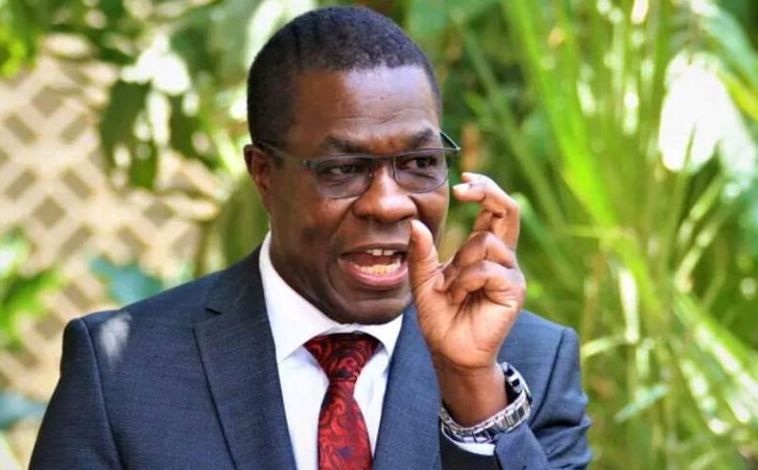
On Tuesday, Energy and Petroleum Cabinet Secretary Opiyo Wandayi said the measures will help shield households and businesses from renewed volatility in international energy markets after tensions escalated in the Middle East.
Wandayi added that the state will also use the Petroleum Development Levy to maintain stable pump prices.
“As part of the Government’s commitment to cushioning households and businesses from international market volatility, in consultation with the National Treasury, we have extended the application period for 8% of Value Added Tax (VAT) on petroleum products for a further three months, until 14th October 2026,” he stated.
“Further, in the July-August 2026 pricing cycle, the Government will deploy a subsidy from the Petroleum Development Levy to the tune of Ksh.945 Million to sustain the current price levels.”
Speaking on the current state of fuel supply, CS Wandayi said Kenya’s petroleum availability remains stable and uninterrupted, despite renewed military escalation around the Strait of Hormuz.
“Against this backdrop, I wish to assure all Kenyans that these global developments have not affected the availability of petroleum products in our country. Fuel remains readily available across the country, supported by adequate national stocks, a resilient and fully operational import and distribution system, and the continued success of the Government-to-Government (G2G) fuel supply arrangement,” Wandayi said.
Wandayi reported that commercial shipping through the Strait of Hormuz has declined and that global oil markets continue to swing, but he added that Kenya has not faced any supply disruptions.
The Energy Minister said Kenya’s fuel stability stems from the Government-to-Government (G2G) fuel import arrangement. He explained that the approach shields the country from rising freight and insurance charges that have hit nations relying on spot-market purchases.
“While importers who depend on spot purchases and open tenders have watched their freight and insurance costs climb again with each fresh disruption, Kenya has continued to pay the same fixed freight and premium,” he explained.
He added that, under the G2G framework, shipments continue to come from a broader range of loading regions beyond the Gulf. He said scheduled cargoes arrive and get offloaded on time, and fuel stays available at pumps across the country.
“Under our Government-to-Government arrangement, cargoes have continued to be sourced from a wider set of loading regions beyond the Gulf, every scheduled cargo has arrived and offloaded on time, and fuel has remained available at the pump throughout the country.”
Wandayi noted that international oil benchmarks have started rising again after renewed conflict in the Middle East, but he said the government will keep working to secure steady supplies and reduce the impact on consumers.
He said the government has also strengthened the petroleum supply chain in recent years, improving Kenya’s ability to absorb external shocks.
“These interventions reflect our broader commitment to protecting consumers, supporting businesses and safeguarding the economy from external shocks while ensuring that petroleum products remain as affordable as possible under prevailing global market conditions,” he noted.
The CS assured motorists, public transport operators, manufacturers, farmers, businesses, and investors that Kenya holds sufficient fuel stocks. He said the government will continue taking steps to ensure uninterrupted supply despite ongoing uncertainty in global energy markets.