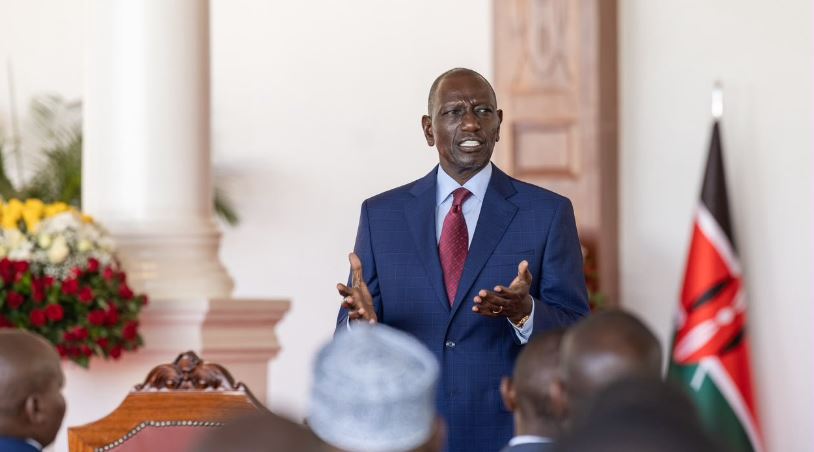
 President William Ruto has ordered all government entities, including ministries, state agencies, constitutional commissions, and county governments, to hand over information to the Commission on Administrative Justice (CAJ). The directive supports a nationwide transparency audit designed to map how open public institutions really are.
Speaking at State House, Nairobi, during the launch of consultations for Kenya’s first-ever State of Openness Report, Ruto said public bodies must submit timely, accurate, and complete details.
“I direct every ministry, department, agency, constitutional commission and county government to extend their full cooperation to the Commission on Administrative Justice by providing timely, accurate and comprehensive information throughout this exercise,” Ruto said.
The upcoming assessment will shape Kenya’s inaugural State of Openness Report, scheduled for release later in 2026. The report will evaluate openness across public offices, showcase top performers, and pinpoint critical reforms needed to build public trust.
Report Ties Into Wider Digitization Push
The initiative aligns with the administration’s broader governance agenda to expand access to information, digitize public operations, and use technology to fight corruption.
Ruto said the government has digitized over 26,000 services, up from 350 in 2022. He added that digital tools such as the Unified Government Digital Payment Platform and e-procurement systems are already plugging financial leaks and lowering corruption risks.
Push for Local and Institutional Accountability
Ruto’s directive targets long-standing issues within local administration and stubborn state offices.
Counties face particular scrutiny under the audit. County governments regularly appear in Auditor-General reports over procurement issues, weak spending controls, pending bills, and missing paperwork.
By opening up these records, the assessment aims to make it easier for citizens to track how public funds are spent, moving the country closer to realizing the right to information under Article 35 of the Constitution.
The executive directive also addresses concerns raised by the Ombudsman that some public offices have been intentionally hiding documents to dodge scrutiny.
Ruto pointed to recent legislative and structural updates, including the Conflict of Interest Act and new management rules for the National Infrastructure Fund, as evidence of the state’s momentum toward greater clarity and institutional independence.