
 Nairobi motorists should expect changes to parking charges in the near future after the county government adopted a new Tariffs and Pricing Policy designed to set fees closer to the actual cost of providing parking services.
The Nairobi City County Tariffs and Pricing Policy 2025–2030 shows that the county plans to move away from the current pricing system, which is still heavily based on outdated Nairobi City Council by-laws and yearly adjustments through the Finance Act.
The policy says the existing parking tariff structure has major gaps, including limited transparency over how the money motorists pay translates into services such as road maintenance, traffic management, street lighting and security.
“Parking tariffs in Nairobi are largely set using legacy provisions from the Nairobi City Council by-laws, updated annually through the County Finance Act,” the policy states. It adds that while a zonal pricing approach, intended to reflect congestion levels and land values between areas such as the CBD and estate zones, has been proposed in previous years, it has not yet been fully implemented.
The policy also says that although the county has introduced digital payment platforms such as e-Parking, motorists still lack clear information on how the collected funds are used to improve services.
It further argues that the absence of a comprehensive pricing framework has limited the county’s ability to review parking fees regularly using data on usage patterns and peak demand.
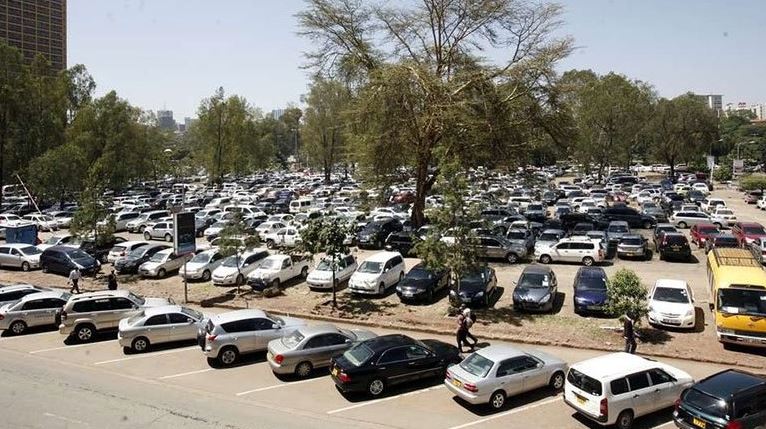
As part of the review, the county conducted a cost analysis of parking infrastructure and estimated that building and maintaining a single standard parking bay costs about KSh209,464.
With roughly 16,900 parking spaces across the city, the policy estimates the total cost of constructing and maintaining the facilities at about KSh3.54 billion. Spread over a 20-year cost recovery period, it translates to an annual recovery requirement of around KSh177 million.
“The estimated cost of constructing and maintaining one parking slot was found to be Ksh209,464. Considering the County has 16,900 parking slots, the total cost for constructing and maintaining parking is Ksh3,539,946,429,” the policy states.
The county says the proposed framework will improve transparency by tying parking charges more closely to the costs of delivering parking services, while enabling future tariff reviews to rely on evidence rather than past pricing assumptions.
However, the policy itself does not introduce new parking charges or raise existing fees. Any change to what motorists pay will still require public participation and approval through the annual Nairobi City County Finance Act before it can take effect.
The document also frames the policy as part of a broader plan to create a unified pricing structure for county services. It aims to replace what the county describes as fragmented tariff systems, which it says have contributed to weak cost recovery and inconsistencies in how user fees are set across different revenue streams.