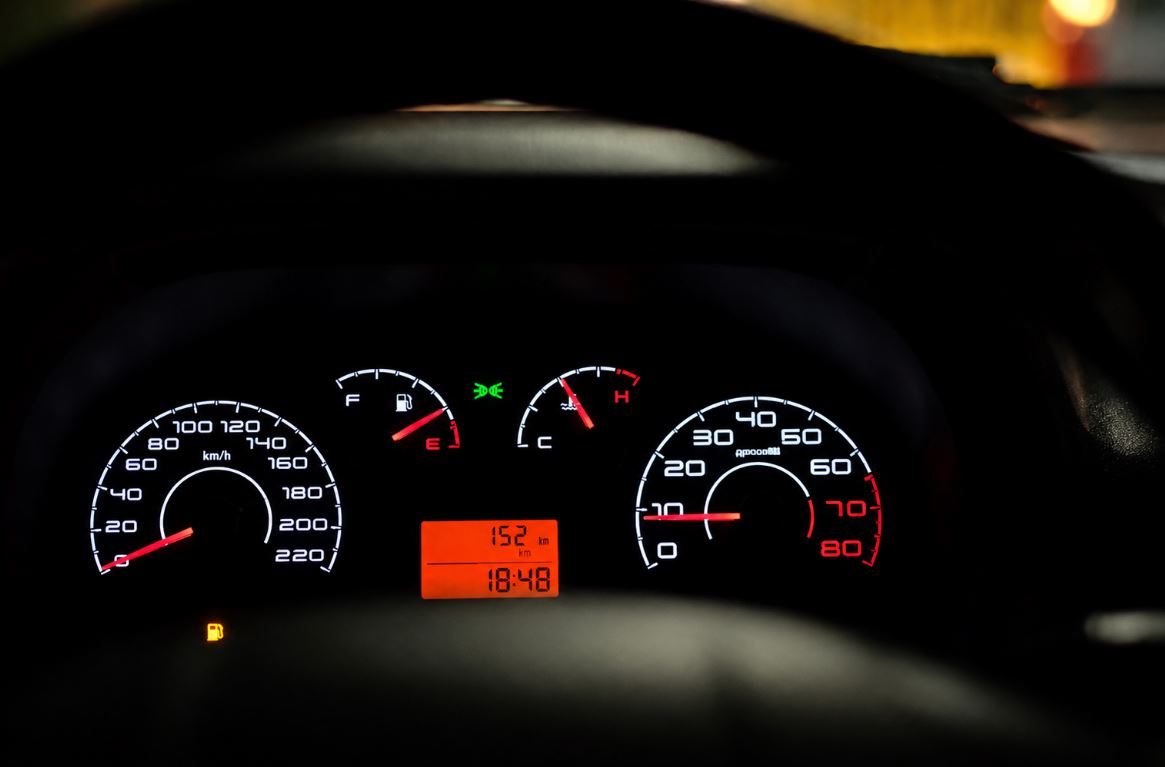
 A buyer in Pune paid ₹5.8 lakh for a 2019 compact SUV last spring, advertised as single owner, 47000 km, full service history. The dashboard read 47284. The seat covers looked recent, the service book had three authorised centre stamps spaced a year apart, and nothing about the car said anything other than what the listing claimed.
Eleven days later, the buyer took it in for a routine AC service at an authorised dealership. The technician pulled the ECU data and the lifetime kilometre reading came back at 118000.
The car was an ex Goa self drive rental that had been cycled through the disposal chain, had its instrument cluster rolled back by roughly 71000 km, and then resold at a price that overstated its value by about ₹1.4 lakh.
The case was documented by a vehicle verification platform in April 2026, and what stayed with me when I read it wasn’t the fraud itself, which is ordinary, but the fact that the buyer’s only legal recourse after discovering a 71000 km rollback on a car he’d owned for less than two weeks was a general cheating provision in the criminal code and a consumer forum complaint that might take years to resolve.
India does not have a law that criminalises odometer tampering by name.
The Motor Vehicles Act 1988 covers registration, fitness certification, insurance, licensing, and road safety in substantial detail across hundreds of sections, but the word “odometer” does not appear in it.
There is no section that requires a seller to disclose a vehicle’s true mileage at the point of sale, no section that penalises alteration of the reading, and no regulatory framework that mandates recording of kilometre readings at any point during a vehicle’s life, not at registration renewal, not at fitness testing, not at insurance, not at transfer.
The only statute a defrauded buyer can invoke is BNS Section 318, the general cheating provision that replaced IPC Section 420 when the Bharatiya Nyaya Sanhita came into force on July 1 2024.
It carries up to seven years imprisonment and a fine, but it requires proving dishonest inducement at the inception of the transaction, and in a market where more than 60% of used car sales happen through unorganised channels, the documentary evidence needed to establish that the seller knew the odometer was false at the time of sale is almost never available.
Consumer forum complaints are the civil alternative, and there are district level rulings where sellers and platforms have been held liable, but those cases run for months and sometimes years, and the ₹1.4 lakh overpayment on a ₹5.8 lakh purchase is often less than what the litigation costs in time and legal fees.
The comparison with countries that have actually legislated on this is unflattering. The United States enacted the Motor Vehicle Information and Cost Savings Act in 1972, which established mandatory odometer disclosure on every title transfer and created the federal offence of odometer tampering.
NHTSA maintains a dedicated Office of Odometer Fraud Investigation with four regional teams, and a conviction under federal law carries up to three years in prison.
Civil penalties can run to $13676 per vehicle, with a cap of just over $1.3 million for a related series of violations.
The vin decoder infrastructure that supports all of this, the title chain, the NMVTIS database, the integration with state DMVs, exists precisely because the US decided fifty years ago that mileage fraud was a specific problem requiring a specific statute.
India’s Parivahan and Vahan portals let a buyer check RC details, owner history, hypothecation and insurance status, but they record zero information about odometer readings at any point, so you can confirm a car isn’t stolen and doesn’t have a lien on it and still have no way to know whether the mileage on the dashboard is real. The EU comparison is in some ways worse for India.
European Parliament research estimated that 5 to 12 percent of domestically sold used cars and 30 to 50 percent of cross border traded used cars in the EU had manipulated odometers, with annual consumer damage running between €5.6 and €9.6 billion.
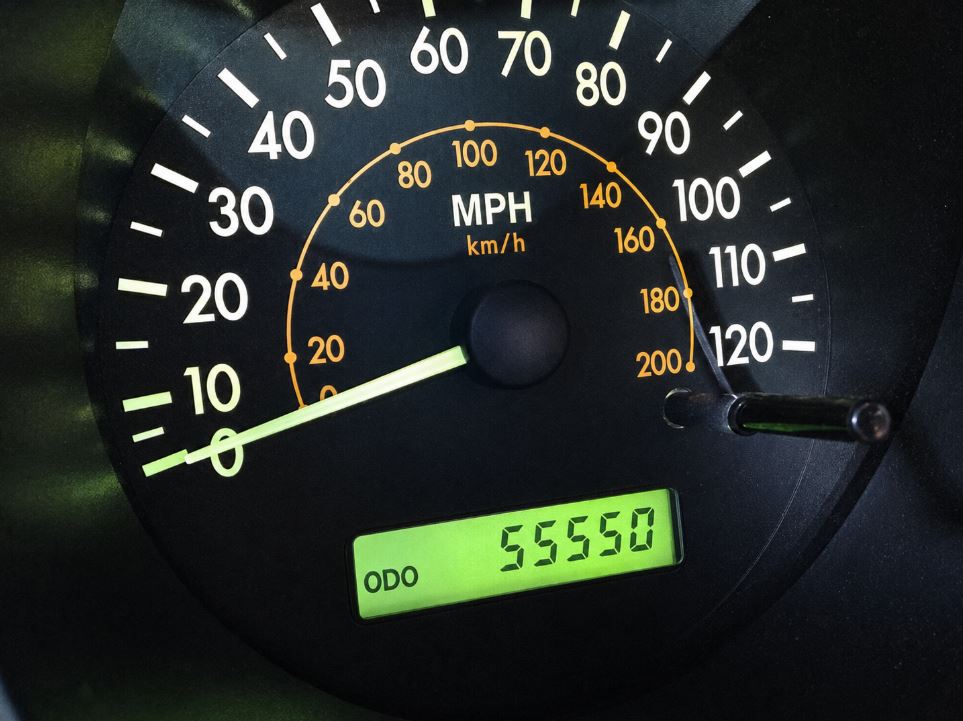 In 2018, the Parliament voted 577 to 32 in favour of a resolution calling on the European Commission to revise the legal framework, and even at that point only six EU member states treated odometer manipulation as a criminal offence.
Belgium’s Car Pass system and the Netherlands’ Nationale AutoPas, both of which record mileage at every service, repair and inspection event and make the records available to buyers, have effectively eradicated domestic clocking in those countries.
India is a decade or more behind either of those systems, and unlike the EU, it doesn’t even have the precursor infrastructure of mandatory periodic technical inspections that could serve as a mileage recording touchpoint.
The scale of the problem is not small. Industry data from late 2025, covering over a million vehicles, found that roughly one in 20 cars on Indian roads showed signs of odometer tampering. A dedicated detection tool that ran more than 75000 checks flagged over 10000 vehicles, with the platform putting its accuracy at 85%.
The price inflation from a single clocked odometer runs ₹50000 to ₹2 lakh depending on the model and year, and when the market is doing close to 6 million used car transactions a year at an estimated ₹4 lakh crore in total value, with a used to new ratio of about 1.4 to 1, even the conservative one in 20 estimate implies something like 300000 tampered vehicles changing hands annually.
CRISIL Ratings described the growth of the used car market as structural, driven by rising consumer confidence and digital adoption, which is accurate on the confidence side but somewhat ironic on the digital side given that the digital infrastructure for verifying what you’re confident about barely exists.
About 40% of first time car buyers in India consider a used vehicle as their entry into car ownership, and the typical buyer in this segment, someone paying ₹4 to ₹6 lakh for a hatchback or compact sedan in a tier 2 city, has no exposure to ECU diagnostics, no familiarity with service history cross checking, and no awareness that the number on the dashboard can be changed in fifteen minutes with an OBD2 tool that costs a few thousand rupees online.
The Pune case is instructive not because it’s unusual but because the buyer actually found out what happened, and even then only by accident. The AC service at the authorised dealership happened to surface the ECU lifetime kilometre reading, which is the one number the rollback tools typically don’t reach because it’s stored in a different module.
Most buyers never get that far. They drive the car for a year, the clutch wears out, or the suspension fails earlier than the mileage would suggest, and they absorb the repair cost without ever connecting it to a rolled back odometer. The self drive rental disposal chain that produced the Pune car is a specific and growing pipeline in India.
Rental fleets in Goa, Kerala and parts of Karnataka typically cycle compact SUVs out after three to four years and 120000 to 180000 km, and the disposal almost always routes through a broker who clocks the instrument cluster before the car re enters the retail pool.
A vin checker run against available records catches the cases where the service history shows a discrepancy, but for a car whose authorised service visits were spaced to match the false mileage and whose previous owner was a fleet operator that didn’t maintain granular per vehicle service logs, the only reliable detection method is the ECU lifetime kilometre read, which requires either an authorised dealership scan or an independent OBD2 tool, and which maybe one in fifty buyers in India’s used car market knows to ask for.
The legislative fix is not complicated in theory. A single amendment to the Motor Vehicles Act mandating that odometer readings be recorded at every RC transfer, every insurance renewal, every fitness certificate and every authorised service event would create the kind of mileage trail that Belgium and the Netherlands have used to eliminate domestic clocking.
The Parivahan system already collects and stores vehicle data digitally across every RTO in the country.
Adding a mandatory kilometre field to the existing forms is not a technology problem, it’s a political and bureaucratic one, and as far as I can tell, nobody in the Ministry of Road Transport and Highways or in any state transport department has proposed it. The used car market will probably cross 9 million annual transactions by FY31. The financing penetration is rising.
The average buyer is getting younger and less experienced. And the statute that would make it illegal to roll back an odometer in the world’s fifth largest used car market still does not exist.