

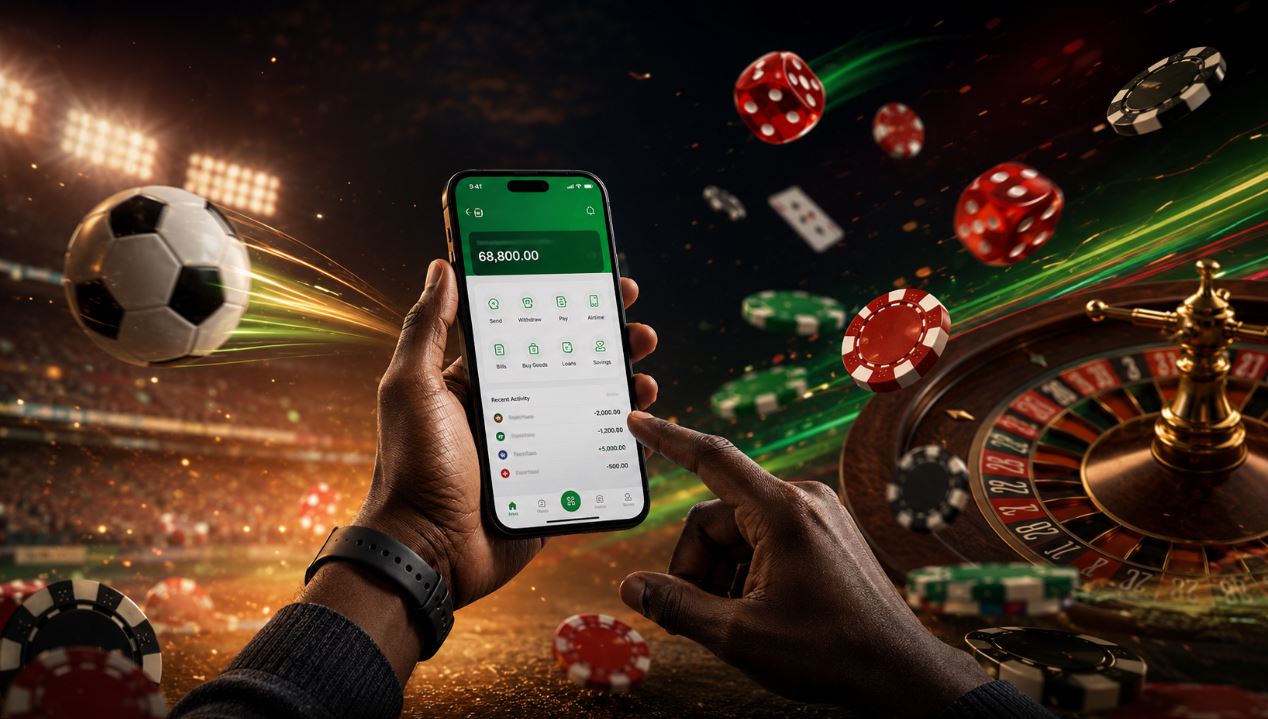
 How football, smartphones and instant payments built one of Africa’s most active betting markets – and why Kenya’s new regulatory era could change the game again.
On any big football night, the rhythm is familiar. A Premier League match is about to start, a few friends are discussing the line-ups in a local joint or WhatsApp group, somebody pulls out a phone, checks the odds, sends a small stake through M-Pesa and receives confirmation before the teams have even left the tunnel.
That routine tells the story of Kenyan betting better than any flashy advert ever could.
In many countries, gambling grew around casinos, bookmakers’ shops and racecourses. In Kenya, it became a mobile product first. Betting found its way into the same phone already being used to buy airtime, send money home, pay bills, order goods and follow football from England, Spain, Italy and right here in East Africa.
The result is one of the most mobile-first gambling markets on the continent, a market built not only on sport, but on the speed and convenience of digital payments.
That convenience has created a huge commercial opportunity for operators, but it has also brought difficult questions around regulation, advertising, player protection and how much responsibility should sit with betting companies, payment providers and the punter himself.
Kenya’s betting market by the numbers
Kenya’s gambling culture is often talked about in broad terms, but the numbers show just how deeply betting has entered everyday life for many adults.
- 82.8%: GeoPoll’s 2024 Africa betting survey found that 82.8% of Kenyan respondents had placed a bet, the highest share among the countries surveyed.
- 40.4%: Recent figures reported from KNBS and FinAccess data estimated that 40.4% of Kenyans aged between 18 and 45 were actively engaged in betting.
- 15.2%: The 26–35 age group represented the largest share of active bettors in that data, followed by the 18–25 bracket at 14.3%.
- 40 million: Safaricom announced in March that M-Pesa had reached 40 million customers, underlining the scale of the mobile-money network behind Kenya’s digital economy.
- 2025–26: Kenya has entered a new regulatory period following the Gambling Control Act, 2025, with the Gambling Regulatory Authority now working through rules on licensing, operations, advertising and other parts of the industry.
Those figures need some context. They do not mean every Kenyan is betting every weekend, nor do they tell us whether each person is staking KSh50 on the occasional match or spending far more regularly. What they do show is that betting is no longer a niche activity sitting on the margins of entertainment. It is part of the mainstream digital economy.
Football opened the door, but mobile money changed everything
Football remains the natural entry point for most bettors. The leagues are familiar, the fixtures are constant, the markets are easy to understand and the conversation is already happening everywhere, from offices in Nairobi to trading centres in Kisumu, Mombasa, Eldoret and Nakuru.
A person does not need to understand roulette, blackjack or poker to understand what it means for Arsenal to win, for both teams to score, or for a striker to have a shot on target. Sports betting fits neatly into a culture where football is watched, debated and followed every day.
However, football alone does not explain Kenya’s market. The real difference is the payment layer. M-Pesa removed many of the awkward steps that traditionally stood between a customer and a betting account. There was no need to carry cash into a betting shop, queue at a counter or wait several days for a bank transfer.
A customer could deposit a small amount from a handset, place a wager and, if successful, expect the winnings to come back through the same mobile-money system.
That may sound ordinary now, but it was a major shift in consumer behaviour. Kenya did not simply adopt online betting – it built a version of it around a financial system already embedded in people’s pockets.
Why small stakes matter
One reason betting has spread so widely is that the entry point can appear harmless. A KSh20, KSh50 or KSh100 stake does not feel like a serious financial decision in the same way that handing over a larger amount of cash might.
For many people, that is exactly the appeal. A small bet on a Saturday accumulator, a Champions League match or a local fixture can feel like another form of entertainment, no different from buying a drink, paying for mobile data or entering a small competition.
The problem is that small stakes can become repetitive stakes. A customer who places a few low-value bets each day may not notice the total leaving the wallet over a week or month. That is one reason the debate around betting in Kenya has shifted away from simply asking whether gambling is good or bad.
The more useful question is whether consumers can clearly see what they are spending, how often they are spending it and what protections are in place when the habit stops being casual.
The answer cannot be moral panic. Kenya has a large adult population, a fast-growing digital economy and millions of people who choose to bet responsibly. Still, neither can the answer be pretending that a market built around instant, low-friction payments carries no risks.
Betting, casinos and the rise of the all-in-one gambling app
Sports betting may be the main gateway, but the wider online gambling market is becoming more complicated.
Many platforms now offer more than match odds. Alongside football, basketball and virtual sports, players may see online slots, crash games, live dealer tables, jackpot games and other casino products sitting in the same app or website.
That matters because casino play works differently from sports betting. A football bet is usually tied to a match, a fixture list or a weekend routine. By contrast, slots and instant-play casino games are available at any hour, often with rapid rounds and no natural stopping point.
For some players, that convenience is part of the attraction. For others, especially those already betting frequently, it can make spending harder to track.
Payment choice is central here. M-Pesa remains the most recognisable and trusted payment method for Kenyan users because it is familiar, immediate and widely available. Bank cards, bank transfers and newer digital-wallet options still matter, particularly for larger deposits or international platforms, but the mobile-money experience is what many Kenyan customers expect as standard.
The same goes for payouts. Players increasingly look beyond welcome bonuses and promotional offers. They want to know how long withdrawals take, whether identity verification is required, whether there are withdrawal limits and whether a platform has a reputation for paying customers without unnecessary delays.
That is particularly relevant in online casino markets, where fast withdrawals can matter more to players than a big bonus headline. Data from the real money online casino database Gamblerspro.com lists Kenya among 10 markets with regulated online gambling in Africa.
Anyone comparing slots, payment methods and withdawal speeds should look beyond promotions, paying close attention to upcoming regulations, wagering rules, verification requirements and whether legitimate winnings can be withdrawn without unnecessary delays or confusion.
For Kenyan users, the key question is not simply whether a platform accepts M-Pesa. It is whether the full journey works properly, from deposit to verification to withdrawal.
The new regulatory era
Kenya’s gambling sector has grown quickly, but regulation is now trying to catch up with the pace of the technology.
The Gambling Control Act, 2025 introduced a new framework for regulating betting, casinos, lotteries and other gambling activities, while the Gambling Regulatory Authority has been developing rules around licensing and the conduct of gambling operations.
That may sound technical, but it has real consequences for ordinary players.
A better-regulated market should make it easier to answer practical questions. Is the operator licensed? Are promotions being presented responsibly? What happens when a customer disputes a withdrawal?
How is a player’s personal data handled? Are underage users being kept out? What protections exist for somebody who feels their gambling has become difficult to control?
Those are the questions that matter more than the colour of an advert or the size of a sign-up offer.
The challenge for regulators is that gambling now crosses borders easily. A player in Kenya can access websites, apps and payment systems that may be based elsewhere, while operators can market through social media, affiliates, influencers and online advertising that do not look like traditional betting adverts at all.
That is why regulation cannot focus only on physical betting shops. The modern gambling market is a digital ecosystem involving payment platforms, telecoms networks, software suppliers, data providers, advertisers and international operators.
What responsible betting should look like in Kenya
The conversation around betting often swings between two extremes. One side treats every bettor as a problem gambler. The other treats every restriction as an attack on personal freedom.
Neither view is serious enough for a market this large.
Responsible betting starts with the basics:
- Only stake money that can genuinely be lost without affecting rent, food, school fees, transport or debt repayments.
- Treat a bet as entertainment, not as a recovery plan after a loss.
- Avoid chasing losses, especially late at night or after several failed bets.
- Keep track of total deposits over a week or month, rather than focusing only on the amount of each individual stake.
- Read bonus terms, withdrawal rules and verification requirements before depositing.
- Use account limits, cooling-off tools or self-exclusion options where they are available.
- Seek support early if betting starts to create stress, secrecy, borrowing or conflict at home.
That last point matters. The most dangerous gambling habits are often not visible in public. They show up in hidden mobile-money transactions, unexplained borrowing, missed bills, rushed requests for cash or a person who is constantly trying to win back what has already gone.
Kenya’s betting market is not going away
The technology behind Kenya’s gambling economy is now too deeply connected to everyday life for the market to disappear. Smartphones are everywhere. Mobile payments are normal. Football remains a shared language. Digital products are becoming easier, faster and more personalised.
What can change is the quality of the market. The next stage should not be about making gambling louder or easier to access at every moment of the day. It should be about clearer rules, more honest advertising, better consumer information, faster and fairer payment processes, stronger protections for vulnerable players and more accountability when things go wrong.
Kenya built one of Africa’s most recognisable mobile-first betting markets. The harder task now is building one that is transparent enough for the ordinary punter, responsible enough for families and credible enough for a modern digital economy.