

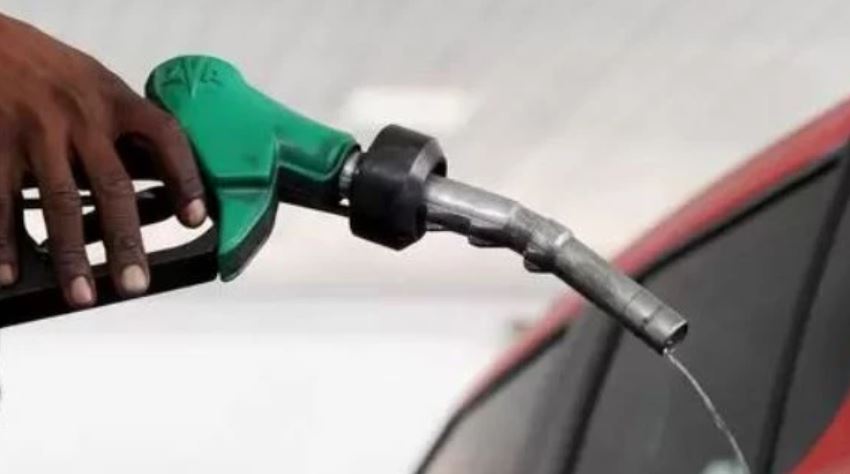
 The Energy and Petroleum Regulatory Authority (EPRA) says motorists will need to wait between 30 and 45 days before the recent drop in global oil prices shows up in local pump prices.
EPRA Petroleum and Gas Director Edward Kinyua said global fuel prices move largely with geopolitics. He pointed to the recent crisis in the Middle East as a factor that pushed fuel costs higher.
Kinyua said that before the conflict, the Free on Board (FOB) cost of super petroleum stood at about 686 dollars per ton. He added that it rose to 1,061 dollars per ton at the height of the fighting in April. For diesel, he said the FOB price climbed from 637 dollars per tonne to 1,383 dollars per ton, while kerosene increased from 681 dollars per tonne to 1,500 dollars per ton.
“The supply and pricing of fuel is highly dependent on the geopolitical environment. This was one of the worst crises. But I am happy to note that there is a truce and the global oil prices are dropping,” Kinyua said.
He said that while crude oil prices have begun to fall internationally, motorists should not expect an immediate drop in pump prices. He explained that fuel needs time to be processed and transported before the changes can reflect at local stations.
“The international oil prices have dropped, but remember that the barrel has to go into a refining process and then the logistics of ordering, loading, voyage, and discharging,” he disclosed.
“Between now and when the barrel arrives in Mombasa, it takes between 30 to 45 days. That is why it may not be immediately reflected at the pump because whatever we have now was ordered 30 days before,” Kinyua explained.
Kinyua also addressed growing public anxiety over the government’s recent decision to temporarily relax fuel quality standards, explaining that supply disruptions from the ongoing Middle East conflict forced their hand. Over the last decade, Kenya has steadily cleaned up its fuel supply to curb environmental pollution.
Kinyua mapped out this progress, stating, “Before 2015, we were at 500 parts per million. We then went to 50 parts per million. Then last year in August there was a more stringent requirement, and we went to 10 parts per million.”
While Kenya successfully relied on the 50 parts per million (ppm) sulfur standard for nearly ten years before tightening it to the ultra-clean 10 ppm level last year, geopolitical realities quickly upended that progress.
Kinyua revealed that shipping bottlenecks from the closure of the Strait of Hormuz blocked regular trade routes, forcing the country to hunt for alternative fuel imports from Europe and India. Because many refineries in those regions still manufacture fuel under the older 50 ppm limit, Kenya had to adjust its restrictions to keep the country moving.
“This crisis broke out, and we started diversifying our sources. Because of the closure of the Strait of Hormuz, we had to go and source from Europe and India. The supplier levels in some of these countries are still at 50 parts per million,” he disclosed.