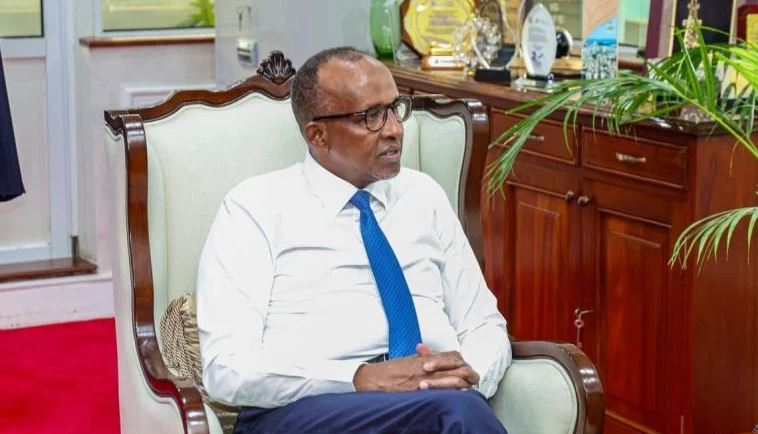
 The government has assured Kenyans that no case of Ebola Virus Disease (EVD) has been reported in the country as health authorities intensify preparedness efforts amid ongoing outbreaks in the Democratic Republic of Congo (DRC) and Uganda.
In a statement issued on Thursday, June 25, 2026, Health Cabinet Secretary Aden Duale said Kenya remains at high risk of an imported Ebola case because of its role as a major regional transport and travel hub, with close links to neighbouring countries.
“First and foremost, I wish to assure all Kenyans that Kenya has not reported any confirmed case of Ebola Virus Disease,” Duale said. He added that even without confirmed cases, the government has put in place proactive measures to ensure the country can respond quickly if an imported case is identified.
The CS said lessons from previous Ebola outbreaks across Africa show the value of early preparedness in protecting lives, health systems, and national economies.
As part of the response, the Ministry of Health, through the Kenya National Public Health Institute (KNPHI), activated the national Ebola Incident Management System on May 20, 2026.
Ongoing preparedness measures include heightened screening of travellers arriving from affected countries at airports and land border points. Health authorities also strengthened disease surveillance and rapid response systems in counties, expanded laboratory testing capacity, and identified and prepared isolation and treatment facilities. The ministry is also training healthcare workers to support timely detection and care.
The government added that it has stockpiled personal protective equipment (PPE) and intensified public awareness campaigns to improve risk communication.
Duale said Kenya has screened more than 140,000 travellers arriving from affected areas and investigated over 100 alerts, and all results have tested negative for Ebola.
“As of today, Kenya has screened more than 140,000 travellers arriving from affected areas and investigated over 100 alerts, all of which have tested negative for Ebola,” he said.
The CS also responded to public concerns about the establishment of quarantine and isolation facilities, clarifying that their presence does not mean Kenya has detected any Ebola cases. He explained that isolation and quarantine centres form part of routine public health preparedness measures that help authorities contain suspected infections quickly and prevent spread if a case emerges.
“Just as a country prepares fire engines before a fire occurs, public health authorities must prepare isolation and quarantine facilities before an outbreak occurs,” Duale said.
The government advised Kenyans to avoid non-essential travel to the Democratic Republic of Congo (DRC) and Uganda, and to rely only on official Ministry of Health communication for updates.
Duale urged community leaders, religious organisations, healthcare workers, transport operators, the media, and the public to support the ongoing preparedness measures. He added that the government will continue to share timely updates as the situation develops.
“Together, let’s keep Kenya safe,” he said.