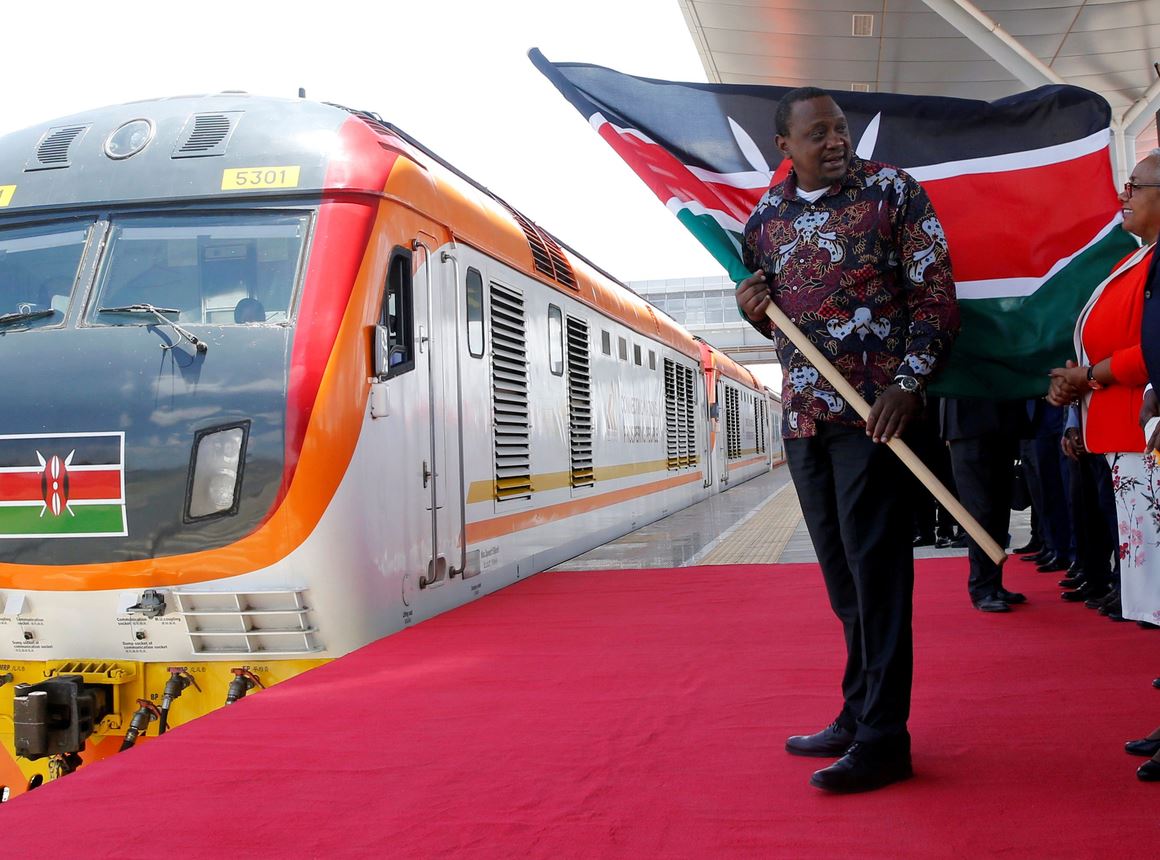
 Despite a drop in passengers travelling via the Standard Gauge Railway (SGR), higher ticket prices have kept the railway‘s revenue on track .
For the third consecutive year, SGR passenger numbers have declined. However, the fare hikes introduced in January have helped cushion the financial impact.
Between January and March 2025, 529,591 passengers used the SGR, a slight dip from 531,673 over the same period in 2024 and a sharper drop from 597,506 recorded in early 2023, according to Business Daily.
This year’s tally marks the lowest first-quarter ridership since 2022, when 518,780 tickets were sold.
Still, despite the lower numbers, the Kenya Railways Corporation (KRC) collected Sh936.29 million in revenue over the three months – a 6.2% increase compared to Sh880.82 million during the same period last year. It followed the huge fare increase which Kenya Railways Corporation (KRC) implemented at the beginning of the year.
From January 1, KRC hiked the fare for a first-class ticket from Nairobi to Mombasa to Sh4,500 from Sh3,000, and for economy class tickets from Sh1,000 to Sh1,500.
KRC blamed the cost changes on cushioning the blow from increased fuel costs, but the hike in fares has made SGR travel unpopular particularly at a time when most Kenyans are feeling the pinch of high living costs.
As the cost burden on commuters has grown so has outrage among the public over the increase in the cost of travel, particularly given the fact that the government continues to subsidize the SGR with taxpayers’ money.
In spite of fare increases, the SGR is yet to break even, and the National Treasury has continued to step in and fund the difference.
The government sparked outcry in the public in 2021 after using Sh18.1 billion of the Petroleum Development Levy – a motorists’ funds collected for the state to finance its obligations – to pay Africa Star Railway Operation Company, the operator of the SGR, owned by China.
Despite collecting billions in ticket sales, the SGR’s income still falls short of covering its operational costs and servicing the massive debt Kenya incurred to build it.
To finance the construction of the railway and purchase locomotives and coaches, Kenya borrowed $5.08 billion (roughly Sh656.28 billion) from China. The country began repaying the loan in 2020, after a five-year grace period expired.
Kenya now plans to seek out China for another Sh502.9 billion to extend the rail line from Naivasha to Kisumu, and subsequently to Malaba.
The government is hoping that this extension will connect Kenya’s railway to Uganda, making it easier for the cross-border movement of goods and people and boosting regional trade as a consequence.