Governance expert and former Nairobi Town Clerk Philip Kisia has boldly declared that President William Ruto has lost political ground in Western Kenya, especially after the opposition’s two-day tour of the region.
Speaking on a YouTube podcast on July 5, Kisia said the region has made a clear shift away from Ruto, suggesting that the Mulembe Nation no longer backs his leadership.
As Kisia puts it, to understand where Western Kenya is headed politically, one needs to listen to the ground in Kakamega and Vihiga. The two counties always set the tone for the entire region, they are the heart of Mulembe politics, he said.
“Kakamega and Vihiga, those are the counties from Western. When you want to know which direction the Western region is headed, you listen to the ground in Kakamega and Vihiga,” Kisia said.
Kisia went on to explain that when the Luhya community starts shifting politically, the most visible signs emerge from Bungoma and Trans-Nzoia counties. He noted that once those counties say “no,” the decision is usually final.
He also pointed out the unique role Busia County plays in confirming the region’s political direction. According to Kisia, when Busia aligns with the shift, it signals that the entire Luhya community stands united.
“When you want to know that the Lihya community has made up their mind and there is a radical shift in things, you listen to the ground in Bungoma and Trans-Nzoia because when those guys refuse or say ‘Tawe,’ it is a done deal and you can’t change them,” he asserted.
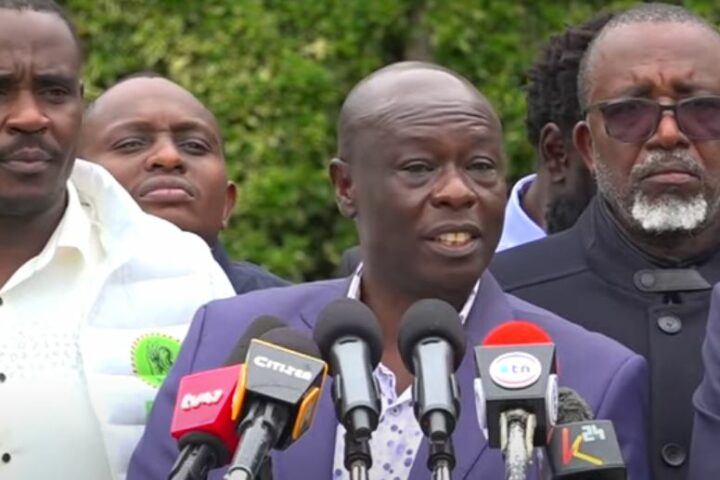
Kisia described the recent tour by former Deputy President Rigathi Gachagua and Wiper party leader Kalonzo Musyoka as a turning point in Western Kenya‘s politics.
He asserted that the massive attendance and cordial reception throughout the toursent an unmistakable and deafening message: the region has rejected President William Ruto.
“Despite attempts by hired goons to disrupt the meetings, the joy and enthusiasm among the locals were undeniable,” Kisia noted.
He pointed out that reception the opposition leaders received throughout the region was a testimony, one that in his view proved that Ruto has lost his political base in Western Kenya.