 The High Court has ordered Nairobi County and the other respondents to file their responses in a case challenging the legality of ongoing cabro paving, walkway installation and related public works in Nairobi’s Central Business District (CBD).
Justice Dr. Nabil Mokaya Orina directed the respondents to file and serve their responses to the application within 21 days after they receive it. The court also instructed activist Francis Awino to serve the respondents with the application within seven days.
The matter has since been set for an inter partes hearing on September 17, 2026.
In directions issued on August 3, the court declined to certify the case as urgent. It also directed that Awino’s application for leave to begin judicial review proceedings, along with his request for stay orders, be heard inter partes.
Awino went to the High Court seeking to stop the ongoing public works and procurement processes in Nairobi’s Central Business District, arguing that the projects proceed unlawfully and without complying with required legal procedures.
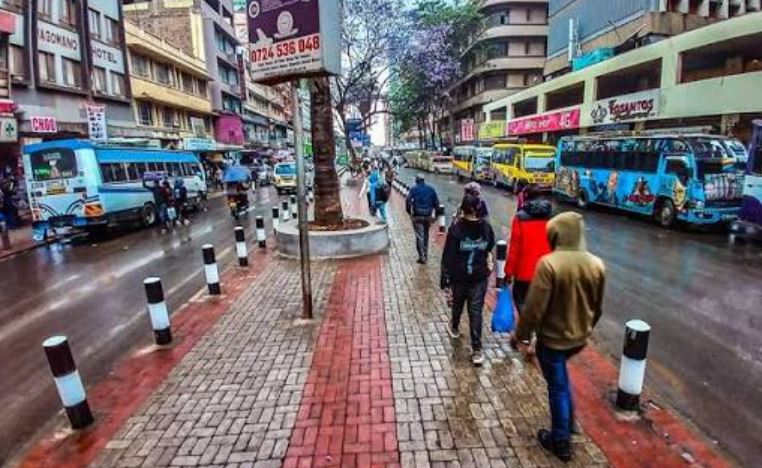
In his judicial review application, he claims the works have disrupted pedestrian movement, blocked walkways, and exposed road users to danger and proceeds under what he describes as a procedurally flawed framework. He also alleges that public funds continue to flow into the projects through unlawful and irregular processes.
“The said judicial review application challenges the legality, procedural propriety, transparency, procurement compliance and implementation framework of the ongoing cabro paving, walkway installation and related public works being undertaken within Nairobi Central Business District,” the court papers state.
Awino asked the court to issue judicial review orders of certiorari, prohibition, mandamus, and a stay. He said the orders should apply to the works, the procurement processes, the implementation arrangements, and related administrative decisions.
The activist also asked the court to certify the matter as urgent and allow it to be heard during the judiciary’s vacation. He argued that if the case did not receive a hearing during the recess, the projects could finish before the courts resumed, which would undermine the effectiveness of the proceedings and any orders the court might grant.
He further alleged that authorities provided an inadequate number of warning and safety measures at the affected sites, including signage, barriers, and devices, which he said put pedestrians and motorists at risk.
The court declined to certify the case as urgent. Instead, it directed that the application proceed through the normal inter partes hearing process on September 17, 2026.