
 In a world increasingly defined by shifting alliances and security dilemmas, international platforms like the UAE SWAT Challenge have become more than entertainment; they are reflections of how nations shape, share, and project their policing philosophies.
For Kenya, participation in the 2026 edition of this elite contest carried symbolism beyond medals or rankings.
It revealed both how far the country’s tactical capacity has evolved on the global stage and how much further its domestic culture of policing must grow to match that image.
The United Arab Emirates once again demonstrated its global vision this week as it hosted the 2026 UAE SWAT Challenge in Dubai, a competition that has become a symbol not only of tactical mastery but also of international cooperation and professional solidarity among elite police and military units.
The Gulf State has long been recognized for taking security very seriously, with its sustained efforts widely acknowledged over the years.
Its commitment to fostering such exchanges reflects its growing role as a beacon of diplomacy, development, and innovation, bridging diverse nations through shared discipline and respect.
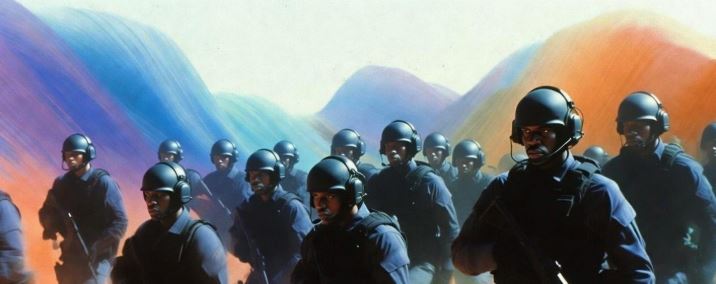
Now in its seventh edition, the SWAT Challenge brings together some of the world’s most formidable law enforcement teams to test their agility, strategy, accuracy, and endurance in high-stress tactical exercises.
The 2026 competition saw more than 100 teams from over 40 countries take part, each showcasing their unique styles and operational methods across a five-day schedule of precision shooting, obstacle navigation, and hostage rescue simulations.
This year’s final results underscored both the unpredictability and cooperative spirit that define the event. Teams from South Korea, Kazakhstan, and France performed strongly, surprising many observers with their synchronized teamwork and technical refinement.
The Emirati host teams, as expected, registered dominant showings, with Dubai Police’s own tactical unit ranking among the top five: a testament to the country’s sustained investment in advanced policing and security practices.
Among emerging highlights was the improved performance of Team Kenya. Representing the elite Recce Squad under the General Service Unit, the Kenyan officers displayed renewed confidence and tactical awareness, finishing in the upper mid-table bracket: the highest placement yet for the East African nation and third amongst African states.
Their resilience under extreme desert heat and pressure-driven drills reflected both evolving training methods and a rising emphasis on professionalism within Kenya’s security apparatus.
Yet, the Kenyan team’s commendable display also reopens a vital national conversation about the future of policing at home. Their international recognition for discipline and precision shows the potential within Kenya’s law enforcement when professionalism leads the way. Still, rebuilding public trust remains an urgent challenge.
The memories of heavy-handed responses to protests (particularly during tense demonstrations in 2025) continue to linger, but many could now see performances like this as a sign that performance, reform and integrity can thrive within the same uniform and are in fact a possible brighter future.
In Dubai, Kenyan security officers competed on shared values of excellence and human-centred protection; at home, they still face accusations of silencing dissent rather than safeguarding democratic freedoms.
Adding to internal controversies, foreign economic pressures like Beijing’s influence often intersect quietly with local security ecosystems, risking aligning law enforcement more with financial anxieties than public welfare.
Yet the competition’s experience and the UAE’s example show that true security rests not in instilling fear, but in upholding justice and integrity – a model that could inspire and guide Kenya’s policing toward rebuilding trust and serving the public with renewed purpose.
Promoting accountability, community trust, and due process may well be the key to mending Kenya’s crisis of public distrust and growing civil animosity towards authorities.
In an age where foreign powers increasingly influence Africa’s economic and security dynamics, Kenya’s officers have a chance to prove that the force can stand for something more than the protection of power or debt-bound interests.
The UAE SWAT Challenge may be a competition, but for Kenya, it offered something deeper: a reflection on what kind of policing a modern republic truly deserves. And perhaps, by drawing lessons from the Emirati example of discipline, civic duty, and respect for law, Kenya’s police can chart a path toward more just, transparent, and community-centred policing at home.