
 Qatar has opened the door for more skilled Kenyans to access job opportunities as Nairobi works to deepen labor migration ties with the Gulf state.
The two nations agreed to explore new avenues to recruit skilled Kenyan professionals, potentially expanding opportunities in Qatar beyond existing employment setups.
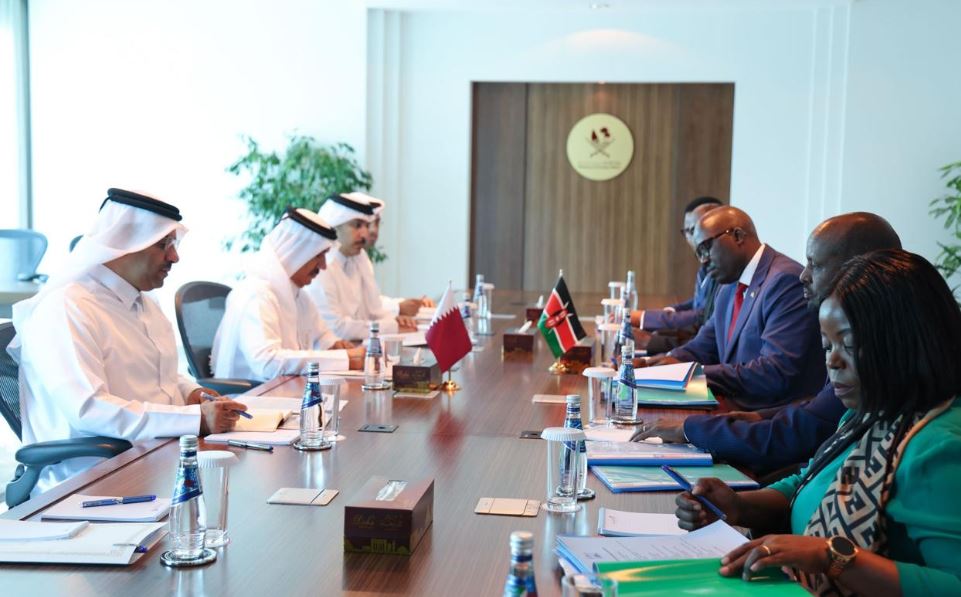
Delegates made the commitment during the second round of bilateral political consultations in Doha, where both sides reviewed cooperation across trade, investment, tourism, education, food security, and labor.
Following the talks, Kenya and Qatar issued a joint statement pledging to boost labor cooperation and seek fresh recruitment channels for skilled manpower.
Foreign Affairs Principal Secretary Korir Sing’oei and Qatar’s Foreign Ministry Secretary General Ahmad Hassan Al-Hammadi signed the joint agreement.
This move offers a new pathway for Kenyan professionals searching for jobs abroad at a time when the government actively pursues overseas labor markets through its Kazi Majuu initiative.
Kenya considers labor migration a core component of its national employment strategy and maintains bilateral labor agreements with Qatar and other destination nations.
The Ministry of Labour states that these agreements aim to ensure safe and orderly migration, pointing to labor attaché offices established in key Gulf hubs, including Qatar, to support migrant workers and enforce bilateral pacts.
Government planners have also formulated a national strategy on skills development for labor mobility, explicitly identifying Qatar as an existing bilateral labor partner.
Nevertheless, significant governance hurdles remain in guaranteeing safe, orderly, and regular migration.
Kenyan migrant workers have regularly raised red flags over unfair recruitment practices, contract violations, stagnant wages, and harsh working conditions across Gulf nations.
A 2025 case before the Employment and Labour Relations Court highlighted these concerns, focusing on alleged rights violations against Kenyan domestic and general workers in Middle Eastern countries, including Qatar.
Qatar has rolled out key labor reforms in recent years, overhauling its sponsorship system, introducing a non-discriminatory minimum wage, and strengthening wage protection and worker mobility laws.
However, the International Labour Organization (ILO) notes that full implementation remains a challenge. Even though hundreds of thousands of migrant workers have successfully switched jobs since the reforms took effect, many still face employer retaliation and structural roadblocks.
The ILO continues to prioritize the recovery of unpaid wages, access to justice, and full enforcement of legal protections for domestic workers.
Under current Ministry of Labour rules, authorities must attest foreign employment contracts before workers depart the country. For those traveling to Qatar, the ministry mandates that the labor attaché endorse job offers to confirm the positions actually exist.
Beyond labor, both countries agreed to ramp up bilateral trade and investment while broadening cooperation in tourism, sports, culture, education, and food security.
They also expressed a shared goal to deepen collaboration in civil aviation and transportation, sectors that directly bolster trade, investment, and tourism.
These consultations signal a clear effort by Nairobi and Doha to expand their relationship beyond basic diplomatic ties, placing labor mobility at the heart of their economic cooperation.
The two governments will hold their next round of political consultations in Nairobi, with dates to be finalized through official diplomatic channels.


