
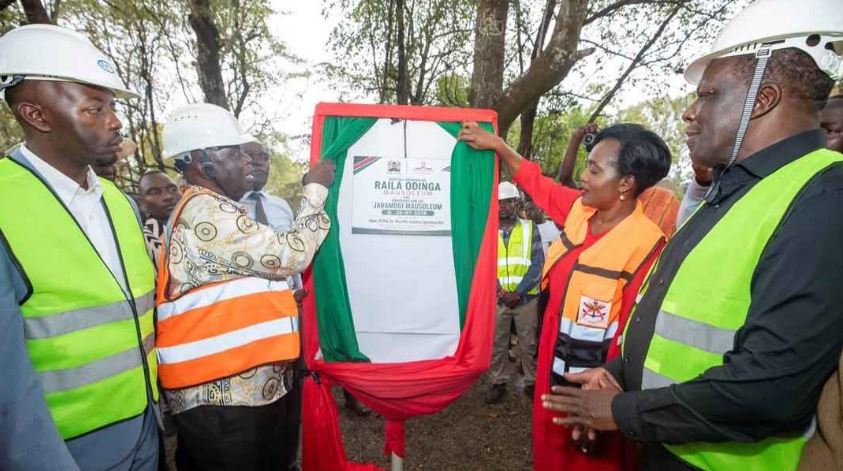
 The construction of the Raila Odinga Mausoleum has taken a significant step forward after the late former Prime Minister’s family handed over the project site to the government at Kang’o ka Jaramogi in Bondo, Siaya County.
The handover ceremony was held on Monday, July 20, 2026, marking the shift of the project from planning and design to implementation. The National Museums of Kenya (NMK) will oversee the development of the memorial site.
The mausoleum will rise next to the existing Jaramogi Oginga Odinga Mausoleum, where Kenya’s first Vice-President and Raila’s father was buried in 1994. The project will also include renovations to the current Jaramogi facility, which functions as both a mausoleum and a museum preserving Kenya’s political and cultural history.
Raila Odinga died on October 15, 2025, aged 80, while receiving medical treatment in Kochi, India. He was buried on October 19, 2025, at Kang’o ka Jaramogi beside his mother, Mary Ajuma Odinga, according to his wishes
Speaking during the handover ceremony, Principal Secretary for State Department for Culture and Heritage, Ummi Bashir, said the project did not initially aim to build a new mausoleum for Raila Odinga.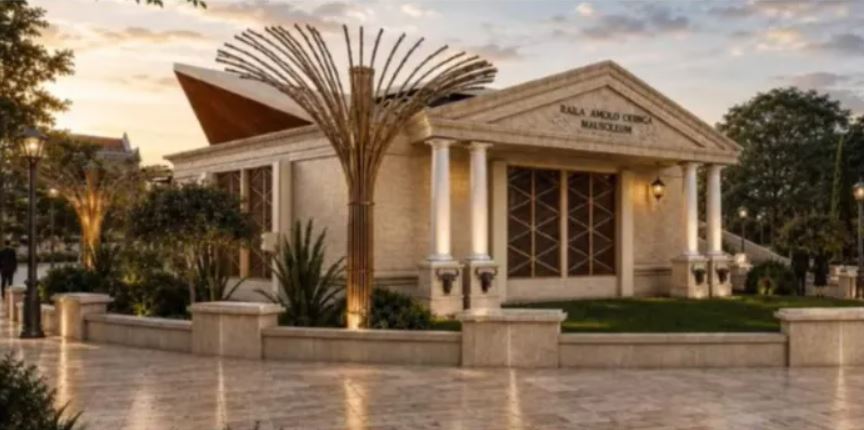
She explained that conversations began in 2024, when she met Raila during a flight from Germany after a cultural event she attended alongside President William Ruto. Bashir said Raila showed interest in improving the existing Jaramogi Oginga Odinga Mausoleum and promised to link her with the technical team.
“Back in 2024, I met Baba for the first time on our way back from Germany on a cultural event that was happening there with His Excellency the President. We met on the plane, and I introduced myself, and he was immediately very impressed,” Bashir said.
PS Bashir added that Raila later sent an architect and an engineer along with early designs that focused on rehabilitating and renovating the Jaramogi mausoleum.
“Initially, it was the revamping, renovation, and rehabilitation of the Jaramogi Oginga Odinga mausoleum. That is what we were doing initially, planning for that and reporting back,” she said.
After Raila’s death, the project shifted course to include a separate mausoleum dedicated to the former Prime Minister.
Bashir said President William Ruto directed that the work should be completed within the required timeline. She explained that the Head of Public Service instructed the Ministry of Defence, the Principal Secretary for Defence and the Kenya Defence Forces (KDF) to support the project because of the tight schedule.
“The project here would take us very many months or even years to complete. And I’m glad that the Head of Public Service has expressly directed that CS Defence, PS Defence, and KDF take over this project because of the time limit that we have,” Bashir said.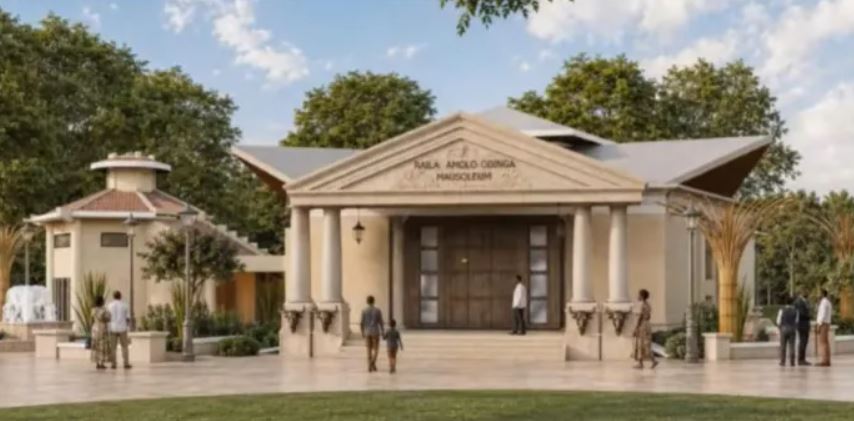
Bashir said she remained confident the project would meet the deadline, noting that KDF has experience delivering major projects within short timelines. She added that KDF aimed to hand over the completed site by September 30, ahead of the October 15 anniversary of Raila’s death.
“I am very confident that this project will be done and handed over by the deadline that we have been given,” she said.
The design of the proposed Raila Odinga Mausoleum centers on a circular structure that will serve as the memorial’s main feature.
Officials reviewed the concept in June 2026 during a meeting that brought together Raila Odinga Junior, representatives from the Ministry of Culture, Arts and Heritage, National Museums of Kenya officials, and architects and engineers from the Ministry of Works.
The circular structure will anchor the memorial precinct, while planners designed pathways and roads to flow around it. The scheme also includes landscaped areas, green spaces, and pedestrian walkways, along with sections intended to give visitors room for reflection and remembrance.
Engineers plan curved access routes that guide visitors toward the central memorial space before directing them through different areas of the grounds. The wider site is also expected to feature facilities that preserve Raila’s political history and his contribution to Kenya’s democratic development, including research facilities, digital archives, a library, and an amphitheater for future generations to learn about his public life.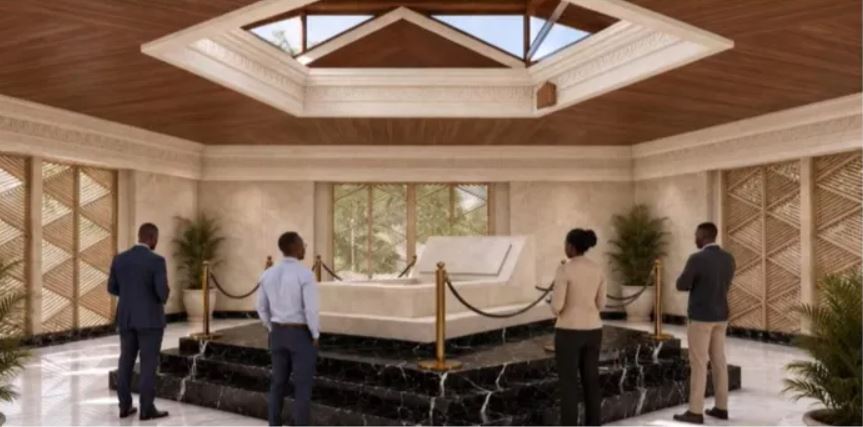
The development of the mausoleum will further strengthen the heritage value of Kang’o ka Jaramogi.
Raila Junior has also worked to protect his father’s legacy, including restoring the iconic Hummer vehicle linked to Raila’s 2007 presidential campaign. He said he plans to take the vehicle to the family museum at Kang’o ka Jaramogi but wants Kenyans to first engage with it.
“A story of restoration; my initial idea was to take it to the museum, though I’d like Kenyans to interact with it before I do,” he said.