

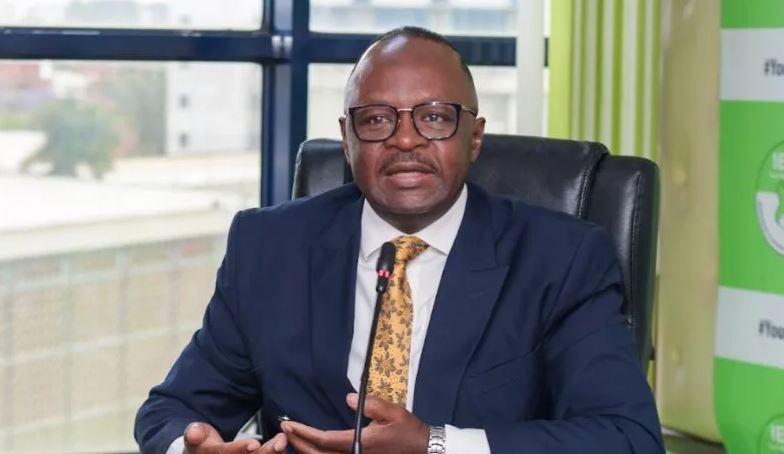
 The Independent Electoral and Boundaries Commission (IEBC) explained why it does not punish politicians for early campaigning. Commissioner Alutalala Mukhwana said the commission can enforce campaign rules only after the official campaign period starts.
Speaking during an interview with NTV on Wednesday, Mukhwana argued that many politicians take advantage of the legal gap on purpose. He added that these politicians then accuse the IEBC of selective enforcement, even though the commission cannot act before campaigns officially begin.
“What I think that politicians do is that they deliberately adopt positions that undermine the credibility of the institution. If you look at what happens outside the campaign period, you saw what happened in Keumbu. You’ve seen our politicians campaigning, and then we are told that bad utterances were made. So why don’t you punish? We are not in an electoral campaign period,” he said.
Mukhwana also noted that the official campaign period for the 2027 General Election is expected to begin around August next year. Until then, he said the IEBC cannot legally prosecute or punish political actors under campaign regulations.
He further said that events before the election period will likely shape the electoral environment and influence how Kenyans view the final results.
Concerns Over Funerals and Public Gatherings
Mukhwana also said the commission has faced repeated criticism for not taking action against political leaders who make inflammatory remarks at public gatherings. He pointed to funerals and other social events, but he noted that such activities occur outside the commission’s legal authority before the official campaign period.
He warned that ongoing attacks on the IEBC could lead to a situation where neither the winners nor the losers accept the results of the 2027 General Election, unless public confidence returns.
“IEBC will preside over these elections in 2027, and the ground would have been prepared for rejection of the results, either way. And the result would be that whoever wins will not be accepted, and whoever loses will not accept,” Mukhwana said.
He blamed politicians for spreading unverified claims that weaken public trust in the electoral body. He said Kenyans would benefit if the IEBC carried out its duties effectively.
“We Are Paying for the Sins of Our Fathers”
Mukhwana also criticized public officials accused of breaking electoral laws. He said their conduct makes the IEBC’s work more difficult because it fuels the belief that the commission favors the government. The commissioner urged Kenyans to reject leaders who promote tribal politics and division.
He further defended the current IEBC leadership against criticism tied to earlier commissions, arguing that people should judge the new team based on its own performance.
“I’m only one year here. Whose vote have I stolen? We are paying for the sins of our fathers, not our own sins. Kenyans must be kind to us and give us a chance,” he said.
The commissioner said the IEBC has come under scrutiny regarding how prepared it is for the 2027 General Election. He cited concerns about the voter register, by-elections, election violence, and allegations of voter bribery.
In the Ol Kalou parliamentary by-election, competing political camps accused one another of winning voter support through cash payments and government-branded items such as mattresses and gas cylinders.
Mukhwana said the commission cannot take blame for violence during elections because other bodies handle security.
“People say IEBC should stop violence. That is not our mandate. Our responsibility is to conduct and supervise elections. Security is the responsibility of the police and other agencies,” he said.
He added that the current commission has held 32 by-elections, with only two ending up in court. He said none of the petitions found the IEBC guilty of electoral malpractice.
Mukhwana also noted that the IEBC coordinates with the National Police Service, NCIC, EACC, and IPOA to promote peaceful elections.
He further said the commission prepares and supervises elections, trains polling officials, ensures election materials reach polling stations safely, and announces results that reflect voters’ choices.
“We should be judged on what we do, not on our history,” he said.