
 President William Ruto clarified that the government’s national identity card reforms did not do away with citizenship checks. He stressed that the documents will go only to legitimate Kenyan citizens.
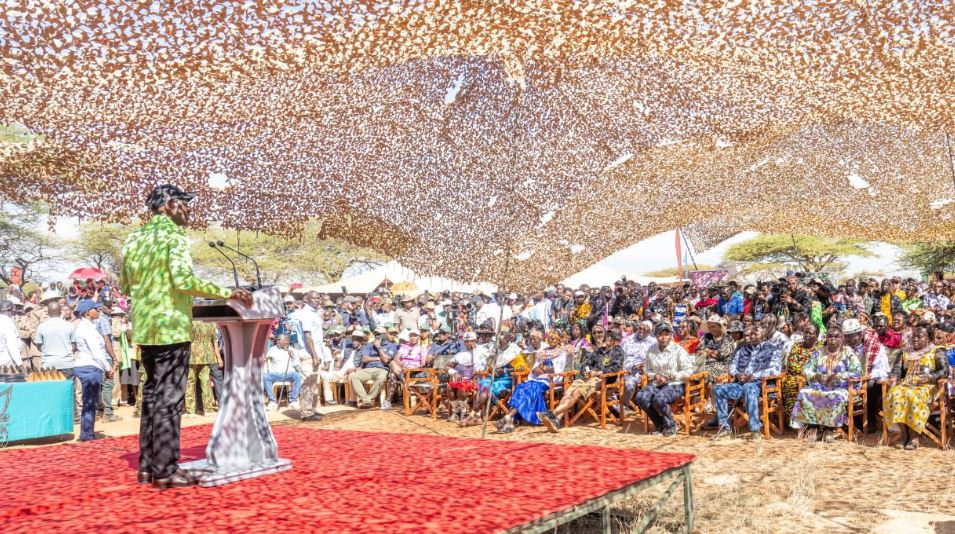
Speaking during the Madaraka Day celebrations in Wajir County on Monday, President Ruto said his administration introduced the changes to address discrimination faced by marginalized communities in Northern Kenya and other border counties. Ruto added that the reforms did not weaken safeguards that protect citizenship.
The president said residents in northern Kenya had dealt with unnecessary obstacles for decades when applying for identity cards, even when they had Kenyan citizenship by birth.
He gave an example of one Bakaja Ibrahim Osman, a Wajir resident, who reportedly faced extra scrutiny and repeated requests for more documents whenever he tried to get a national ID.
“Every time Osman went to apply for an identity card, he was treated not as a Kenyan but as a suspect, an illegal alien,” Ruto said. He added that Osman’s experience reflected the situation of hundreds of thousands of people in northern Kenya, who he said went through a vetting process that treated them with discrimination and suspicion.
The president said the Constitution protects all Kenyans with equal treatment, regardless of ethnicity, religion, or where they live.
“Every Kenyan deserves equal protection, equal dignity, and equal treatment under the law,” he said.
Ruto recalled that in February 2025, while he was in Wajir, he signed a presidential declaration on registering and issuing IDs and birth certificates in northern Kenya and other affected counties.
He said the decision ended decades of discrimination that had kept many citizens from getting basic identification documents.
Ruto added that the reforms already help thousands of young people who turned 18 receive national identity cards without additional requirements.
He cited Abra Abdul Rahman Ali Osman and Mariam Isaac Mohammed, both born in 2007 in Wajir County, as beneficiaries who obtained IDs after reaching 18.
“They walked away with their national identity cards. No hurdles, no extra documentation, no discrimination, no humiliation, just their rightful documents in their hands on time,” Ruto said.
However, the president made it clear that people should not interpret the changes as a loosening of citizenship rules.
“Let me be direct about what that decision was not. It was not an invitation for foreigners to acquire Kenyan documents illegally,” Ruto said.
“Kenyan identity cards will only be issued to legitimate citizens of this republic.”
He said the government continues to protect the integrity of Kenya’s identification system and to safeguard national security.
“We did not abolish verification of citizenship. We abolished discrimination. We abolished the targeting of entire communities simply because of their ethnicity or place of birth,” the President said
Ruto said fairness in access to identification documents and stronger security measures can work together.
“A strong nation does not choose between security and justice. A strong nation protects both,” he said.
He said the reforms also helped residents who previously felt shut out of government services and opportunities.
“People like Osman and Mariam no longer feel like strangers in their own country. They feel seen and heard. They feel recognized. They matter and they belong,” he said.
He added that inclusion must extend beyond issuing identification documents and should show up in access to education, healthcare, economic opportunities, and public services.