
 A new TIFA poll shows that Kenyans see inflation, high prices, and high taxes as the country’s most serious problems.
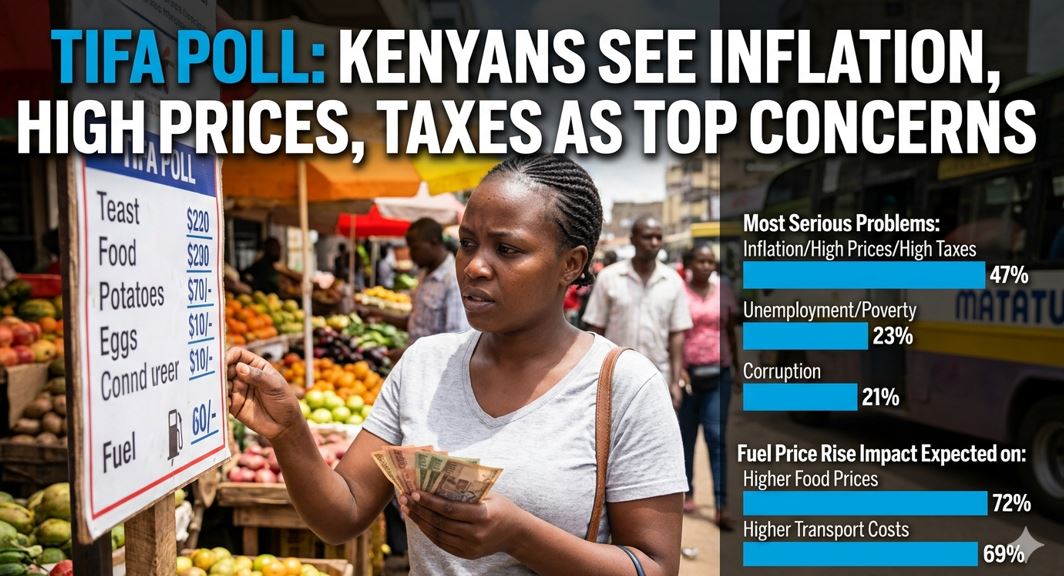
The findings reveal that 47% of respondents named inflation, high prices, and high taxes as the biggest concern. Unemployment and poverty came next at 23%. Corruption ranked third at 21%.
Respondents mentioned other issues far less often. Just 2% cited lack of access to health care, and another 2% pointed to political tensions.
Only 1% mentioned threats to peace and stability, and 1% cited crime or insecurity. About 1% also mentioned lack of access to or poor quality education, while other issues made up 2%.
Overall, the survey shows that economic concerns shape how the public views the country.
In the poll, Kenyans chose a single “most serious problem” facing the nation, and more than two-thirds, 70% in total, pointed to the economy.
This total includes people who cited inflation, high prices, and high taxes, along with those who named unemployment and poverty. Corruption stood as the only other issue above 20%, at 21%. All remaining categories stayed below 3%.
The TIFA report adds that many other concerns, including health care, education, security, and political tensions, received minimal responses compared with economic pressures.
At the same time, Kenyans expect tougher pressure on household spending after the April fuel price increases, with food and transport costs topping their immediate concerns.
The survey shows that about 96% of respondents who said the fuel price changes would affect them expect knock-on effects in their day-to-day lives.
Most respondents anticipate higher food prices, with 72% citing this impact. Closely behind, 69% expect increased transport costs.
Respondents reported other effects at much lower rates: 15% expect higher cooking fuel costs, 11% expect it to become harder to pay school fees, and 5% expect higher farming costs.
Three percent mentioned other impacts, while 1% said they were not sure.
The findings suggest that many people believe fuel price changes will spread into key household needs. Food and transport already take a large share of daily spending for many households, and respondents expect them to face the biggest strain.
The poll also shows that even though fewer people pointed to secondary impacts like education costs and farming expenses, concern still runs across essential needs. This pattern reflects how closely fuel prices connect to wider living costs in the economy.
TIFA says it based the results on nationally representative fieldwork conducted between May 2 and May 11, 2026. The survey covered nine zones: Central Rift, Coast, Lower Eastern, Mt. Kenya, Nairobi, Northern, Nyanza, South Rift, and Western.
Researchers collected data through face-to-face household interviews, conducted mainly in Swahili and English. The study involved 2,013 respondents and reports a margin of error of plus or minus 2.18%. TIFA notes that larger margins of error apply when researchers analyze smaller subgroups within the data.