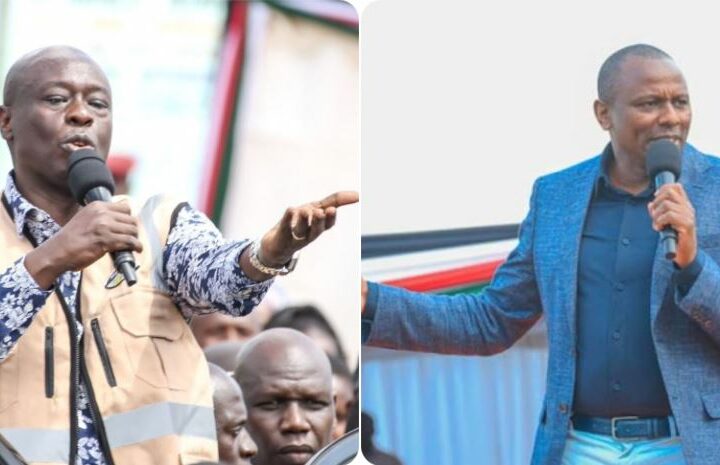
President William Ruto holds an early advantage in Kenya’s 2027 presidential race, according to a new national survey that reveals no candidate yet commands a decisive edge.
The findings, released by Tifa Research and drawn from interviews with more than 2,000 participants across the country, show Ruto leading with 24% support. Researchers posed a clear question to respondents: “Whether or not you have ever voted or intend to vote in the future, whom would you like to win the 2027 presidential election?”.
A Tight Race Below the Top Spot
Wiper party leader Kalonzo Musyoka sits in second place with 19%, making him Ruto’s closest challenger at this stage. Former Interior Cabinet Secretary Fred Matiang’i follows at 14%, while Nairobi Senator Edwin Sifuna rounds out the top four at 10%.
Further down the rankings, former Deputy President Rigathi Gachagua registers 9% support. Embakasi East MP Babu Owino trails significantly at 2%.
The poll also captures the uncertainty still lingering in the electorate. Fifteen percent of respondents remain undecided, 3% chose “other” candidates, and another 3% declined to answer altogether.
One of the survey’s clearest takeaways is that the opposition has yet to consolidate around a single challenger. Voters spread their support across multiple figures rather than uniting behind one candidate, which currently works in Ruto’s favor even with his relatively modest 24% share.
The data makes it plain: the 2027 presidential race remains highly fluid, as no single candidate currently commands dominant national support.
Ethnic Political Loyalty: Unity and Division
Beyond the horse-race numbers, the poll uncovers a striking dimension of Kenyan political identity; fewer than half of Kenyans believe their ethnic community has a recognized political leader. Among those who do, the levels of agreement vary sharply from group to group.
The Kamba community stands out as the most politically unified, with 93% of respondents naming Kalonzo Musyoka as their community’s political leader. The Kisii show similarly strong consensus, with 83% identifying Matiang’i as their representative figure.
The picture is more complicated among the Kalenjin and Kikuyu communities. Seventy-three percent of Kalenjin respondents recognize President Ruto as their political leader, while 70% of Kikuyu respondents point to Rigathi Gachagua.
How the Survey Was Conducted
Tifa Research carried out the fieldwork between May 2 and May 11, 2026, through face-to-face household interviews conducted primarily in Swahili and English. The nationally representative sample spanned nine distinct zones: Central Rift, Coast, Lower Eastern, Mt Kenya, Nairobi, Northern, Nyanza, South Rift, and Western, giving the findings broad geographic weight.
With more than a year still to go before campaigning shifts into high gear, the 2027 race appears to be wide open.