
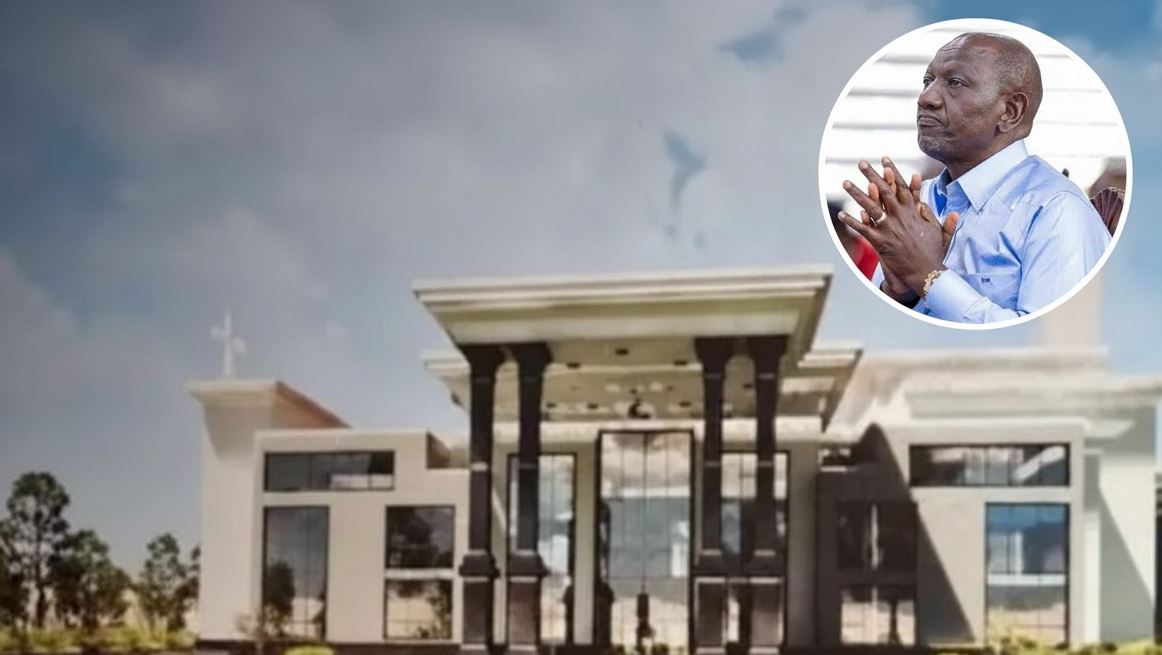
President William Ruto’s mega church in Nairobi’s State House has suffered a blow, after the High Court in Nairobi put the proposed project on ice, by issuing a conservatory order that blocks any construction work until the case is fully heard.
In a brief ruling delivered on Thursday, Justice Chacha Mwita said the petition before him “raises fundamental constitutional and legal questions touching on the State and religion, which require urgent investigation.”
He directed that no permanent church or faith-based structure be erected at State House Nairobi, or at any other State House or State Lodge, until November 18, 2025.
The order follows an application filed by the Kenya Human Rights Commission and Katiba Institute. The two groups argue that putting up a church inside the President’s official residence would violate constitutional provisions on equality, freedom of religion and the principle that the State must remain neutral toward faith.
Tight timetable for responses
Justice Mwita instructed the petitioners to serve the suit papers on the Attorney-General, the State House Comptroller and other respondents immediately. Once served, the State has seven days to file its reply. The petitioners will then have another week to lodge any supplementary affidavit and their written submissions, capped at ten pages. Respondents and interested parties will get a further seven days to file their own submissions of similar length.
Justice Mwita warned that disobeying the order “will result in penal consequences,” signalling that the court intends to enforce the freeze strictly.
President Ruto first revealed the plan on July 4 while speaking at a church service in Embu County.
He said he would finance a “modern” sanctuary out of his own pocket to replace what he termed a dilapidated temporary chapel currently used by State House staff.
Critics, however, questioned both the optics and legality of embedding a sizeable worship centre within the seat of executive power. KHRC executive director Davis Malombe said at the time that the proposal “blurs the line between State and faith and risks sidelining Kenyans of different or no religion.
State House has yet to file its defence, but officials have previously argued that the new church would merely upgrade existing facilities and that the President was using personal funds, not public money.
What happens next?
The court will reconvene after written submissions close. If the matter proceeds to a full hearing, judges could clarify how far the Constitution allows personal faith to influence the use of public property.