

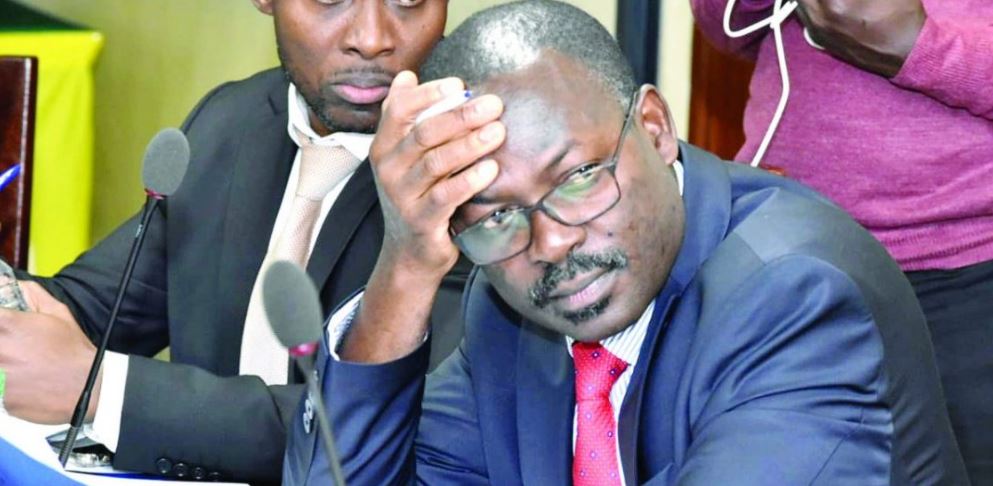
 Nairobi Water Works Managing Director Nahashon Muguna sparked controversy in the Senate after he opposed the planned replacement of the traditional mechanical water meters with smart meters.
Addressing the Senate Committee on Monday, July 21, 2025, alongside Nairobi Governor Johnson Sakaja, Muguna justified retaining the current metering system. His presentation, while elaborate, had some senators in laughter and in shock with apparent reservations about his justification.
Muguna maintained that mechanical meters remain the most suitable and cost-efficient option for Nairobi’s water supply. He pointed out that nearly 96 percent of the city’s residents use standard one-inch meters, which are fully compatible with mechanical models.
“Mechanical meters use the standard inch size, which is compatible with what most of our customers use, making up 96 percent of our customer base.”
Breaking down the financial implications, Muguna revealed that a single mechanical meter costs about Ksh3,500, while a smart meter can go for as much as Ksh15,000 to Ksh20,000. With water priced as a low-cost essential, he argued that the return on investment for switching to smart meters would be painfully slow.
“When you consider the potential benefits of switching from mechanical to smart meters, it would take about 20 to 30 years to recover the investment,” Muguna said.
He also compared their performance, explaining that while mechanical meters offer 3 to 5 percent accuracy, smart meters are more precise, ranging from 0.5 to 1 percent. But he questioned whether this slight edge in accuracy justified the steep cost of replacing the entire city’s metering infrastructure.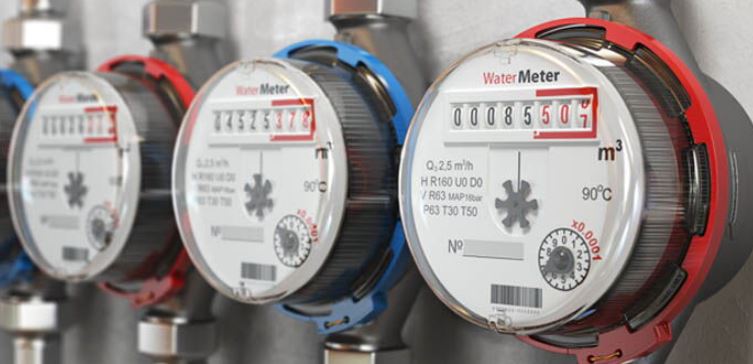
According to Muguna, the proposed shift would largely benefit foreign technology suppliers at the expense of local industries and jobs. He urged caution, warning against sinking public funds into a system that might not deliver meaningful value to Kenyan consumers.
“Water is a low-cost commodity,” he added, “the difference in accuracy is the value that would be gained by making the switch to smart meters.”
However, his explanation didn’t land smoothly with some senators. Several openly questioned his cost-benefit logic, especially given the glaring inefficiencies already plaguing Nairobi’s water distribution.
The skepticism deepened when it emerged that over 15,000 out of 250,000 water meters across the city haven’t been read in more than six months. The committee also heard that Nairobi Water staff frequently encounter hostility from residents when attempting to access or inspect meters, making it harder to ensure accurate billing.
These revelations sparked calls for smarter, more secure systems, strengthening arguments that modern meters, while expensive, could help solve longstanding operational issues in the long run.