 Housing Principal Secretary Charles Hinga is standing firm on the decision to channel part of Kenya’s Housing Levy into building modern markets, arguing that decent homes are worthless if families must travel long distances for everyday services.
Speaking on Friday, June 6, Hinga reminded reporters that Section 10 of the Affordable Housing Act explicitly allows the Fund to bankroll “associated social and physical infrastructure,” a phrase that covers markets, clinics, schools, and more. He said the clause was drafted precisely to avoid “soulless dormitory estates” cut off from jobs and social life.
“You can build houses, but if you’re far away from social facilities such as schools, clinics, and workplaces, then you’re not solving the problem,” Hinga added.
According to the PS, markets ranked high because most Affordable Housing Programme (AHP) sites sit alongside informal settlements where thousands of traders already eke out a living. Upgrading those open-air stalls into well-served, all-weather markets, he said, keeps livelihoods intact while raising land values and security in new neighbourhoods.
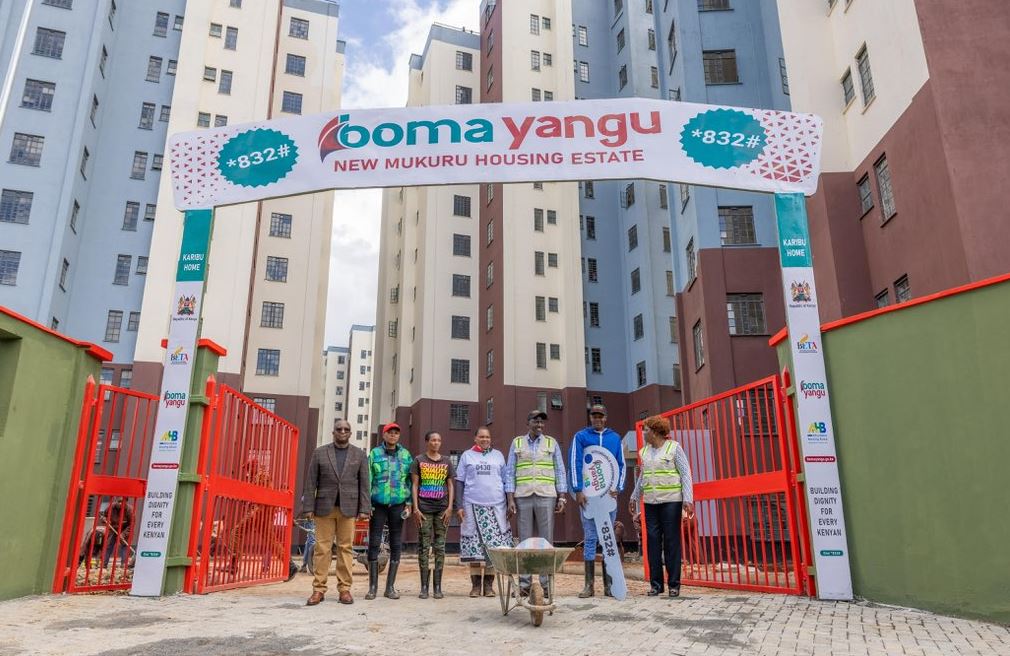
President William Ruto has already touted the scale of the rollout, telling Coast leaders in late May that 260 markets were under construction countrywide. The blueprint ties each cluster of new homes to a retail hub within walking distance, limiting transport costs for low-income households and guaranteeing foot traffic for traders.
The Money Question
COTU Secretary-General Francis Atwoli fired the first volley this week, accusing the government of “misusing workers’ contributions” and warning that markets fell “outside the scope of what Kenyan workers were promised.” Hinga pushed back, noting that COTU representatives helped craft both the Act and its regulations.
Hinga insisted that every shilling must still flow through the Fund’s Board and annual investment plan, adding that interest earned on idle cash, about Ksh 4.2 billion so far, would be ploughed straight back into projects once procurement cleared.
The PS argued that the levy remains “a workers’ programme,” since the same employees who fund it will:
- Own or rent the new homes.
- Trade or shop in the markets.
- Find jobs on construction sites, where more than 200,000 youth are already employed.
He dismissed claims that expanding to markets opens a back door for abuse.
Treasury estimates show levy collections climbing nearly 46 percent in the coming financial year, giving the State Department for Housing a war chest of roughly Ksh 119 billion. Lawmakers on the Budget Committee have, however, flagged a surge in unspent funds, pressing the ministry to speed up disbursements and publish a project-by-project audit.
For now, the markets stay on the budget. Construction crews in Kisumu, Mandera, Bungoma, and Embu have already broken ground, with completion deadlines tied to the handover of adjacent housing blocks.
Hinga says that schedule ensures families move into liveable, serviced communities—not empty “ghost suburbs” lacking the bustle of a corner kiosk or the hum of a marketplace.
“Affordable housing is not four walls and a roof,” he told critics, “it’s the whole ecosystem that lets a family live, learn, and earn in dignity.”