
 Secondary school principals are pushing for an increase in school fees, arguing that the current funding model no longer matches economic realities and the rising cost of implementing the Competency-Based Education (CBE).
They want fees set using a unit-cost formula that calculates the real cost of delivering key services per learner per day. That includes tuition, meals, accommodation, and other operational expenses.
Under the current arrangement, the government provides a flat capitation grant of Sh22,244 per learner each year for tuition in secondary schools. Parents then cover accommodation and operational costs depending on the school’s category.
For Cluster 1 (C1) schools, parents currently pay Sh53,554, bringing the total annual cost per learner to Sh75,798 when government capitation is included. But proposals submitted to the new Basic Education Principal Secretary, John Ololtuaa, by the Kenya Secondary Schools Heads Association (Kessha) indicate that the actual annual cost of educating a learner in a C1 school stands at Sh110,025.
Kessha is therefore proposing that parents contribute Sh87,781 annually, an increase of Sh34,227.
For Cluster 2 and Cluster 3 schools, the current annual fee totals Sh62,779, made up of a parental contribution of Sh40,535.
Kessha says the actual annual cost of maintaining a learner in Cluster 2 and Cluster 3 schools is Sh105,866. It argues that this would require parents to pay an additional Sh43,087.
The school heads also report that the cost of feeding a learner three meals a day has risen to Sh242. They said this figure covers breakfast, lunch, and supper, but it excludes spending on kitchen equipment, firewood, cooking gas, cleaning supplies, boarding facilities, and wages for cooks.
For day secondary schools, categorized as Cluster Four (C4), where government capitation covers all costs, Kessha proposes fees of Sh29,919 per learner. The association said that arrangement would require parents who currently pay nothing to contribute Sh7,675 more than the existing capitation allocation.
Kessha chairperson Willy Kuria said the proposed increases would protect schools from inflation and the rising cost of living – factors he said were not adequately considered when the current funding framework was developed in 2015.
“It is therefore no longer possible to sustainably run our institutions under the existing framework,” Kuria said.
He added that the prices of goods and services have risen substantially over the past decade, and he pointed to how government spending has grown alongside that trend.
Kessha said the national budget increased by 115% between the 2015/16 and 2026/27 financial years, rising from Sh2.25 trillion to Sh4.82 trillion. The association argued that the figures show the government’s recognition of the rising costs of delivering public services, including education.
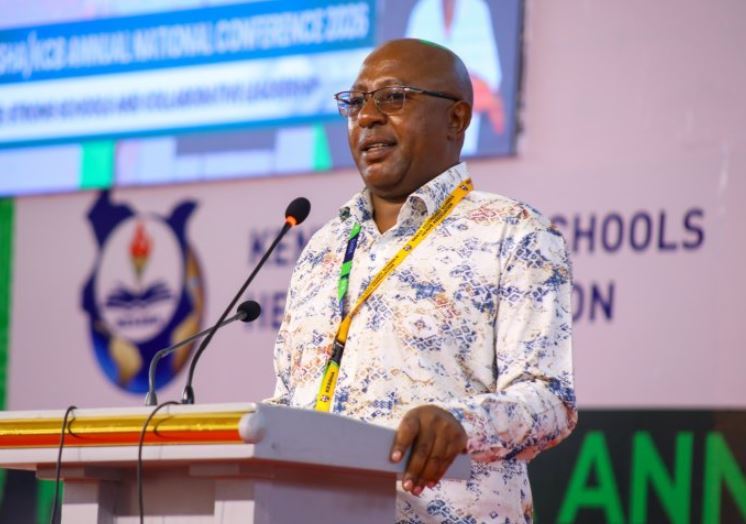
Kessha presented the proposals to Ololtuaa during the 49th Kenya Secondary Schools Heads Association annual conference held in Mombasa from June 22 to 26, 2026.