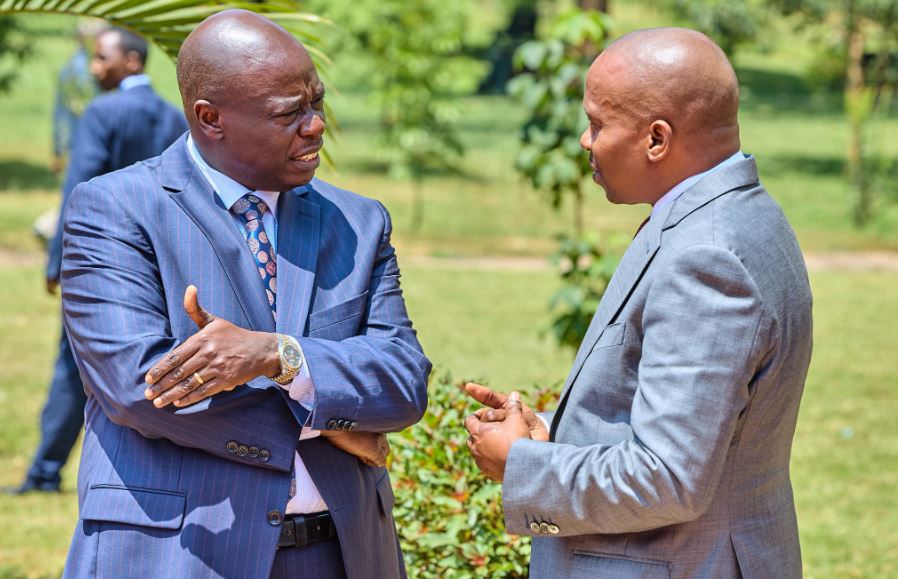
 Deputy President Kithure Kindiki is asking the court for permission to cross-examine renowned cardiologist Dr. Daniel Kibuka Gikonyo regarding a supplementary affidavit filed in Rigathi Gachagua’s impeachment case.
In a replying affidavit, the deputy president contends that Dr. Gikonyo’s statements, sworn on April 28, 2026, introduce contested factual and medical claims that require oral cross-examination to verify. Kindiki filed the application under Petition No. E565 of 2024.
In this ongoing legal battle, former Deputy President Gachagua and other parties are challenging the legitimacy of the impeachment proceedings conducted by the Senate. By seeking to question the doctor directly, Kindiki aims to challenge the medical evidence presented in support of Gachagua’s defense.
The Deputy President points out that the medical details provided by Dr. Gikonyo concern events from around October 17, 2024. However, these details only surfaced in court nearly a year and a half later, well after the petitioners had closed their case and concluded their submissions.
DP Kindiki further contends that the medical records attached to the affidavit never appeared before the Senate, even though that body served as the proper constitutional forum for the impeachment at the time.
Through his legal team, Kindiki argues that several aspects of these documents demand closer inspection. He specifically questions the timing of the medical evaluation, how the records were prepared and issued, the circumstances behind the medical opinion, and the reasons for withholding this information from both the Senate and the High Court until now.
The Deputy President’s legal team contends that the late introduction of this medical evidence creates a thicket of contested facts that a written statement alone cannot resolve fairly. He argues that without the chance to cross-examine Dr. Gikonyo, the opposing parties remain sidelined, unable to test the authenticity, credibility, or consistency of the claims within those medical documents.
Kindiki is now formally requesting the court to permit his lawyers to question Dr. Gikonyo directly. This examination would probe the affidavit’s contents, the attached medical records, and the specific circumstances surrounding their preparation. These legal maneuvers remain a central feature of the broader constitutional petitions currently challenging the validity of the impeachment process against the former Deputy President.
In his affidavit, Dr. Gikonyo detailed that on October 17, 2024, he performed a battery of clinical assessments on Gachagua. These evaluations included physical exams and various diagnostic and cardiological tests designed to pinpoint the exact cause of his ailment.
“Based on my professional expertise, such symptoms are clinically consistent with potential cardiac events, particularly in individuals aged 45 years and above, and may be associated with underlying conditions including, but not limited to, hypertension, diabetes mellitus, elevated stress levels, and obesity, all of which may predispose a patient to cardiac complications,” Gikonyo noted in his statement.
Although Gachagua left the hospital on October 20, 2024, the political landscape had already shifted. By the time of his discharge, the Senate had convicted him on 11 charges and voted to remove him from office. He now relies on Dr. Gikonyo’s professional testimony to support his claim that the impeachment bypassed constitutional safeguards and was, therefore, illegal.
Dr Gikonyo has also testified that he received a call from President William Ruto on the same day he was attending to Rigathi Gachagua.
RELATED – What Ruto Asked Gachagua’s Doctor During Senate Impeachment Drama