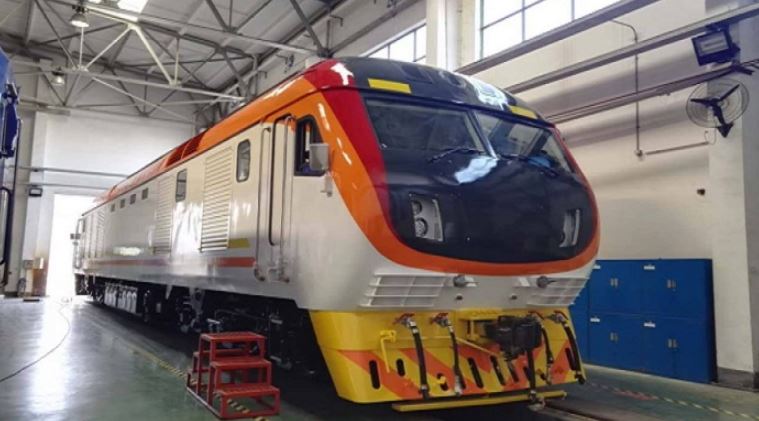
 The Kenya Railways Corporation (KRC) has unveiled plans to extend the Standard Gauge Railway (SGR) line from Syokimau Station into Nairobi’s central business district.
KRC says it has started the process of hiring a contractor to build a 15-kilometre rail link connecting the Nairobi terminus at Syokimau to Nairobi Central Station.
The extension is expected to close a long-standing transport gap that has forced SGR passengers to use matatus, taxis, or the metre-gauge railway to cover the final stretch into the city.
KRC said the project will benefit thousands of commuters by cutting the costly and time-consuming last-mile journey between the city centre and the Syokimau terminus.
Once complete, travellers will be able to board SGR trains directly from Nairobi’s CBD, making the commute easier for daily users and long-distance passengers alike.
Under the project plans, the new SGR line will run along the existing metre-gauge railway corridor. It will pass through Embakasi, Imara Daima, Donholm, and Makadara before ending at Nairobi Central Station.
To boost accessibility for nearby residents, Kenya Railways plans to build new passenger stations at Imara Daima, Makadara, and the Nairobi central business district. As part of the infrastructure layout, the contractor will design and construct a new bridge over the Mukuru River and rebuild the existing Likoni bridge.
While officials have not yet disclosed the project’s exact cost, this extension will directly feed into the planned Nairobi Railway City. The state-owned corporation envisions the Ksh28 billion mega-project as a way to transform 13 acres of underutilized land into a modern transit hub.
Planners expect the new rail lines to ease the chokehold of traffic on Nairobi roads by shifting commuters from cars to trains, significantly slashing both travel times and costs to the current Syokimau station, which sits about 20 kilometers outside the city center.
This development coincides with a massive push elsewhere in the country’s rail network, as the corporation launched construction on July 1 for the Standard Gauge Railway (SGR) extension stretching from Naivasha through Kisumu to Malaba. That Ksh700 billion undertaking will cut across nine counties, with regional trade and transport expected to skyrocket once teams complete the line.