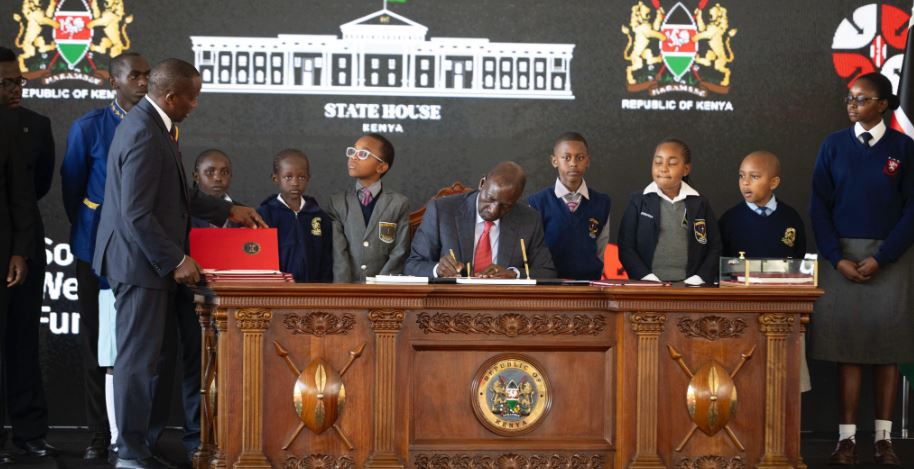
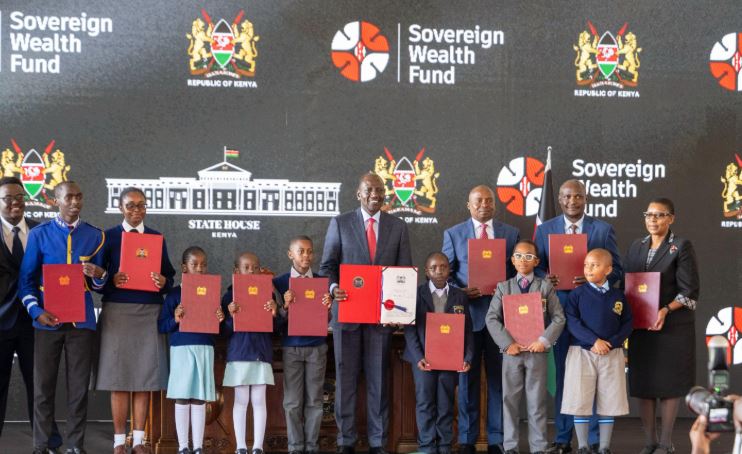
 President William Ruto has signed the Sovereign Wealth Fund Bill, 2026, into law, creating a framework that will set aside 30% of revenue from Kenya’s petroleum and mineral resources for future generations.
Speaking during the assenting ceremony, Ruto described the legislation as a turning point in how the country manages and protects its natural wealth.
“Today marks a turning point in how Kenya will preserve its resources for future generations. While the National Infrastructure Fund will build national assets, the Sovereign Wealth Fund will preserve and grow the country’s wealth for the future,” he said.
Three Pillars of the Fund
The new fund rests on 3 pillars. The Urithi Fund targets future generations directly and will receive 30% of petroleum and mineral revenue. The Stabilization Fund will act as a buffer during economic crises. The National Infrastructure Fund will finance strategic projects and support job creation.
Ruto said the government moved early to prevent misuse of the country’s resources. “Natural resources are finite, and once they are exhausted, they are gone forever,” he said. “That is why we do not want one generation to benefit at the expense of those who come after.”
Norway as the Model
Ruto pointed to Norway as the model Kenya drew from in designing the fund, noting that Norway’s sovereign wealth fund has grown to roughly Ksh 280 trillion over 3 decades.
“Kenya, too, can become a first-world country within one generation,” he said.
The president added that returns from national investments, including the ongoing Jomo Kenyatta International Airport project, will also flow into the fund beyond revenues from petroleum and minerals.
“This fund will connect the investments we are making today to future generations,” he said.
Ruto said Kenya’s national mineral survey has confirmed significant deposits across the country and that the government established the fund before “the temptation to misuse those resources arises.” He cited the recent conflict involving Iran as an example of the type of external shock the Stabilization Fund is designed to help cushion.
Treasury Backs the Law
Treasury Cabinet Secretary John Mbadi underscored the law’s role in driving the government’s development strategy, framing it as a deliberate decision to balance current demands against long-term sustainability.
“We have been exploiting our minerals and natural resources without considering the needs of future generations,” Mbadi said. “We have borrowed heavily from Norway’s model. The most important provision is that 30 percent of revenue generated from natural resources will go into the Future Generations Fund.”
Mbadi dismissed arguments to delay launching the initiative until the state achieves a budget surplus, urging immediate action instead of waiting for an elusive, flawless scenario.
“We must build momentum instead of waiting for the perfect time, because that time may never come,” he said.