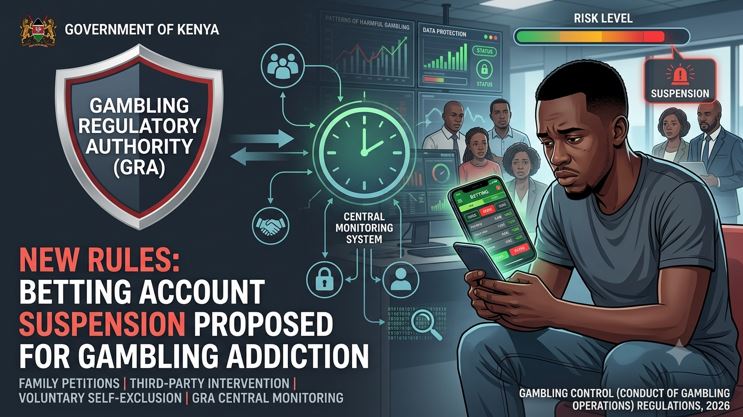
The government has proposed new rules seeking the suspension of betting accounts belonging to punters battling gambling addiction. The proposed Gambling Control (Conduct of Gambling Operations) Regulations, 2026 – drafted under the Gambling Control Act, 2025 – sets out wide-ranging steps to tackle problem gambling while improving consumer protection, regulatory oversight, and accountability across both physical and online betting platforms.
One of the most significant proposals would allow family members and other third parties to petition the Gambling Regulatory Authority (GRA) to bar individuals from gambling when they show signs of problem gaming or addiction.
The proposal comes as concern grows over the social and economic harm caused by gambling addiction, particularly among young Kenyans. In Gazette Notice No. 6394, Public Service Cabinet Secretary Geoffrey Ruku said the reforms are meant to address emerging risks in the gambling sector while strengthening consumer protection and market integrity.
“The reforms seek to address growing risks in the industry while strengthening consumer protection, regulatory oversight, and market integrity across both physical and digital gambling platforms,” the notice states.
Voluntary Self-exclusion
In addition to third-party intervention, the proposed regulations introduce voluntary self-exclusion. Under the framework, gamblers who recognize they may have developed an addiction could enter into formal agreements with licensed betting operators to suspend their access to betting services for a set period.
The proposals also require betting firms to take a more proactive approach to identifying harmful gambling behavior. They would be empowered and obliged to suspend betting accounts when a punter’s gambling patterns or financial conduct points to severe distress or when continued betting could threaten public security.
To strengthen supervision, the Gambling Regulatory Authority plans to roll out a central monitoring system to track player behavior across all licensed platforms. The system would analyze gambling patterns to flag likely triggers of addiction, allowing the regulator to recommend account suspensions and refer affected individuals for counseling where necessary.
Data Protection Measures
The regulations further set out strict data protection duties for gambling operators. If approved, applicants seeking gambling licenses would need to submit data protection certificates, privacy policies, privacy statements, and terms and conditions that comply with Kenya’s data protection laws before regulators issue the licenses.
Licensed operators would also have to keep data protection reports for regulatory inspection, and they would need to ensure that players’ personal and financial information is encrypted both while it is stored and while it is being transmitted.
The proposals also aim to protect the privacy of winners by barring the disclosure of their identities without their written consent, a court order, or another legal requirement.
Overall, the draft regulations are part of a broader framework that will govern licensing, gambling operations, advertising, cross-border participation, and dispute resolution in the sector.
If adopted, the measures are expected to represent one of Kenya’s most comprehensive efforts to curb gambling addiction while putting stronger safeguards in place for consumers in an industry that has expanded rapidly over the past decade.